Making rosé wine without oxidative color damage, brick-orange browning, or bitter seed astringency requires extracting monomeric anthocyanin pigments and skin-bound thiol precursors from dark-skinned grapes for 1.5 to 24 hours via direct pressing (0.2 to 0.8 bar), cold skin maceration (8 to 12 °C), or saignée juice bleeding (10% to 20% volumetric draw), cold-settling the pressed pink juice with pectolytic enzymes to 80 to 150 NTU, fermenting at 12 to 16 °C (54 to 61 °F) with a thiol- or ester-selective Saccharomyces cerevisiae strain fed organic amino nitrogen (150 to 200 mg N/L), and blocking malolactic fermentation under 0.8 mg/L molecular SO2. This specification governs still dry rosé and white-style juice fermentations across small-batch home winemaking and micro-winery cellar operations.
Understanding how rosé wine is made requires pairing a brief red-grape skin extraction (0 to 24 hours in aqueous, zero-ethanol must) with the exact clarification, reductive gas blanketing, and cool fermentation pipeline of how white wine is made. Because water-soluble malvidin-3-O-glucoside pigments and 60% to 80% of cysteinylated/glutathionylated thiol precursors (Cys-3MH and Glut-3MH) diffuse out of the outer 3 to 4 hypodermal skin layers within 2 to 18 hours at 8 to 12 °C, whereas bitter seed coat flavan-3-ols ((+)-catechin and (-)-epicatechin) remain locked behind a waxy lipid cuticle until ethanol (>1% to 2% ABV) and heat (>16 °C) develop after 24 hours, separating the juice before fermentation begins locks Color Intensity (CI = OD420 + OD520) between 0.15 and 0.85 AU and Total Polyphenol Index (TPI) between 6 and 25 without tannic harshness.
Whereas our pillar guide on how wine fermentation works establishes the five-stage small-batch fermentation timeline and the four completion checks before bottling, this process specification details the extraction kinetics, turbidity bounds, yeast enzymatic pathways, and oxidation controls that separate direct-press, macerated, and saignée rosés from standard white winemaking.
| Process Parameter | Direct Press Rosé (Pressurage Direct) | Short Cold Maceration (Macération Pelliculaire) | Saignée Juice Bleed (Rosé de Saignée) | Standard White Winemaking Baseline |
|---|---|---|---|---|
| Harvest Ripeness & Potential ABV | 20.5 to 22.5 °Brix (11.8% to 13.0% ABV) |
21.0 to 23.0 °Brix (12.1% to 13.3% ABV) |
23.5 to 25.5 °Brix (13.5% to 15.0% ABV; red pick) |
20.0 to 22.5 °Brix (11.5% to 13.0% ABV) |
Initial Must pH & Titratable Acidity |
pH 3.15 to 3.35 | TA 6.0 to 7.5 g/L |
pH 3.20 to 3.40 | TA 5.8 to 7.2 g/L |
pH 3.45 to 3.65 | TA 4.2 to 5.5 g/L (+0.5 to 1.5 g/L tartaric fix) |
pH 3.05 to 3.30 | TA 6.5 to 8.5 g/L |
| Skin Contact Duration & Temp | 1.5 to 4.0 hours in press at 8 to 14 °C |
2 to 24 hours cold soak at 8 to 12 °C (46 to 54 °F) |
4 to 24 hours in red vat at 10 to 18 °C (10% to 20% bleed) |
0 to 2 hours press at 8 to 14 °C (no skin soak) |
| Heart-Cut Press Pressure Limit | 0.2 to 0.8 bar pneumatic membrane |
Free-run + 0.2 to 0.8 bar gentle press |
Screen-drained free-run (0.0 bar mechanical press) |
0.2 to 1.0 bar whole-cluster or crushed press |
Color Intensity (CI = OD420 + OD520) |
0.15 to 0.35 AU | Hue 0.75 to 1.05 (Pale salmon/peach) |
0.30 to 0.60 AU | Hue 0.65 to 0.85 (Coral/rose pink) |
0.45 to 0.85+ AU | Hue 0.55 to 0.80 (Ruby/cherry pink) |
0.05 to 0.12 AU (OD420 only; pale straw) |
Total Polyphenol Index (TPI / OD280) |
TPI 6 to 10 (<15 to 25 mg/L catechins) |
TPI 9 to 16 (high skin thiol precursors) |
TPI 14 to 25 (savory mid-palate grip) |
TPI 4 to 9 (minimal phenolics) |
| Cold Settling (Débourbage) Target | 80 to 150 NTU (4 to 8 °C, 12 to 24 h + pectinase) |
80 to 150 NTU (4 to 8 °C, 12 to 24 h + pectinase) |
100 to 150 NTU (4 to 8 °C, 12 to 24 h + pectinase) |
60 to 150 NTU (4 to 8 °C, 12 to 24 h + pectinase) |
| Alcoholic Fermentation Temp & YAN | 12 to 16 °C | 150 to 200 mg N/L organic YAN |
12 to 16 °C | 150 to 200 mg N/L organic YAN |
13 to 16 °C | 160 to 210 mg N/L organic YAN |
12 to 16 °C | 150 to 200 mg N/L organic YAN |
| Malolactic Fermentation (MLF) Rule | Blocked (<12 °C + 0.8 mg/L molecular SO2) |
Blocked (<12 °C + 0.8 mg/L molecular SO2) |
Blocked (0.8 mg/L mol SO2 or 150 to 250 mg/L lysozyme) |
Blocked in crisp aromatic styles (optional in Chardonnay) |
How do the three rosé production methods compare with how white wine is made?
With the exception of rare teinturier (“dyer”) cultivars such as Alicante Bouschet, Saperavi, or Chambourcin whose pulp contains red pigment, standard dark-skinned Vitis vinifera wine grapes (Grenache Noir, Cinsault, Syrah, Mourvèdre, Pinot Noir, Sangiovese, Cabernet Franc, Tempranillo) contain clear, unpigmented mesocarp pulp juice. Red-purple anthocyanin pigments (predominantly malvidin-3-O-glucoside) are compartmentalized inside the cellular vacuoles of the outer 3 to 4 hypodermal layers of the grape skin (exocarp). Bitter flavan-3-ol monomers ((+)-catechin and (-)-epicatechin) and condensed proanthocyanidin tannins are concentrated in the waxy seed coat (testa) and woody stems (rachis).
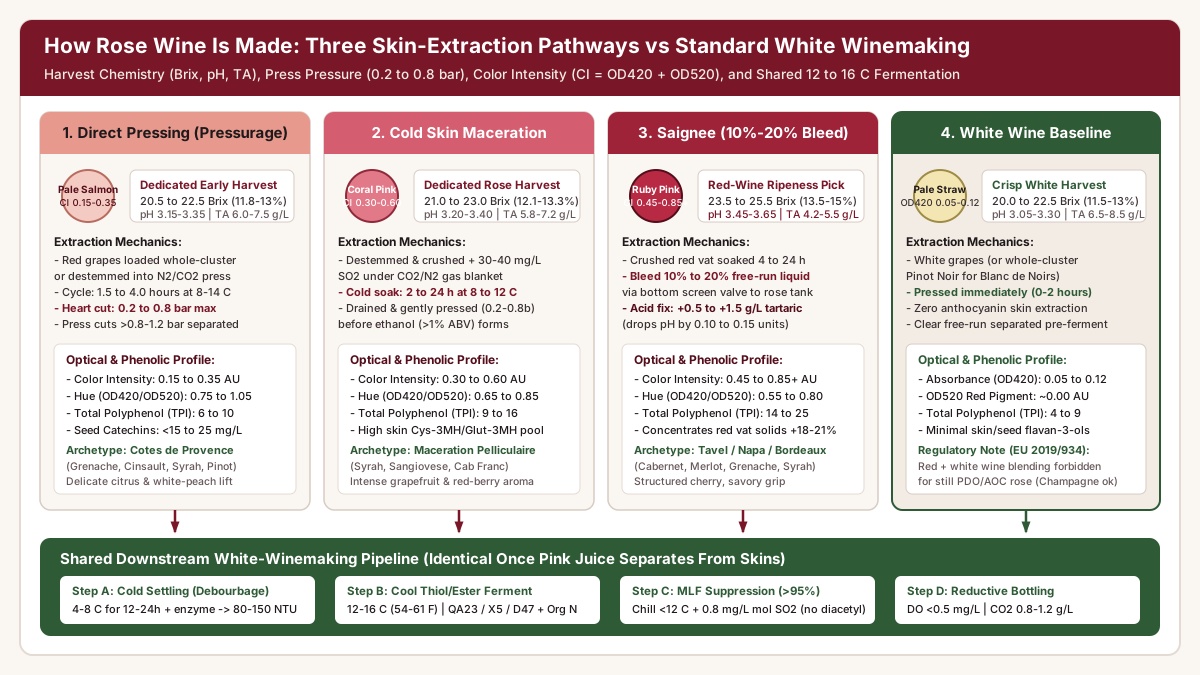
Because the juice inside a red grape berry is clear, how white wine is made serves as the mechanical foundation for how rosé wine is made:
- How White Wine Is Made (Zero-Skin-Extraction Baseline): White wine grapes (or uncrushed black Pinot Noir and Pinot Meunier clusters in sparkling Blanc de Noirs) are harvested early for high natural acidity (
20.0 to 22.5 °Brix, titratable acidityTA 6.5 to 8.5 g/Las tartaric acid,pH 3.05 to 3.30). The fruit is pressed immediately within0 to 2 hoursof arrival at8 to 14 °Cto separate clear free-run and light-press juice from skins, seeds, and stems before alcoholic fermentation begins. The raw juice is cold-settled (débourbage) at4 to 8 °Cto60 to 150 NTUand fermented as clear liquid at12 to 16 °C (54 to 61 °F). - How Rosé Wine Is Made (Controlled Pre-Fermentation Skin Extraction + White Fermentation): Rosé begins with dark-skinned red grapes (sometimes co-pressed with
5% to 20%white grapes such as Vermentino/Rolle in Côtes de Provence) that undergo a strictly timed pre-fermentation skin extraction lasting1.5 to 24 hours. Once the pink must hits its optical absorbance target (CI = 0.15 to 0.85 AU), the liquid is drained or pressed off the skins and fermented identically to a delicate aromatic white wine.
Winemakers execute that initial skin-to-juice transfer through one of three distinct mechanical pathways.
Method 1: Direct pressing (pressurage direct / rosé de presse)
Direct pressing is the benchmark technique of Côtes de Provence (Grenache Noir, Cinsault, Syrah, Mourvèdre, Tibouren) and ultra-pale cool-climate Pinot Noir rosés. Vineyard blocks dedicated to direct-press rosé are picked 7 to 14 days earlier than red-wine blocks from the same estate (see our small-vineyard grape ripeness and harvest record), targeting 20.5 to 22.5 °Brix (11.8% to 13.0% potential ABV), TA 6.0 to 7.5 g/L, and pH 3.15 to 3.35.
Chilled night-harvested or morning-harvested red grapes (8 to 14 °C) are loaded either as intact whole clusters or destemmed, lightly crushed berries directly into an inerted pneumatic membrane press (flushed with N2 or CO2 in closed-door or Bucher Inertys systems). No static tank maceration takes place. Instead, skin pigment diffuses into the juice strictly during press loading, free-run draining (jus de goutte), and low-pressure sequential membrane inflations over a 1.5 to 4.0 hour total press cycle:
- Heart-Cut Pressure Ceiling (
0.2 to 0.8 bar): The primary rosé juice fraction combines the free-run drain and gentle pneumatic press cuts up to0.2 to 0.8 bar. - Segregation of Heavy Press Fractions (
>0.8 to 1.2 bar): Above0.8 to 1.2 bar, mechanical shear crushes outer skin cells and extracts high potassium (K+), raising juicepHby+0.15 to +0.25 unitsand doubling seed/skin catechins. Commercial cellars segregate press cuts above0.8 barinto a separate lot for fining or distillation. - Optical & Phenolic Output: Direct pressing yields pale salmon, peach, melon, or onion-skin (pelure d’oignon) hues with a spectrophotometric Color Intensity (
CI = OD420 + OD520in a10 mmcuvette) of0.15 to 0.35 AU, a Hue angle (OD420 / OD520) of0.75 to 1.05, and a Total Polyphenol Index (TPI = OD280) of6 to 10(<15 to 25 mg/Ltotal catechins), matching the delicate palate weight of a crisp white wine.
Method 2: Short cold skin maceration (macération pelliculaire / rosé de macération)
When a winemaker wants deeper coral-pink saturation or maximum extraction of skin-bound varietal aroma precursors (Cys-3MH and Glut-3MH) from varieties with moderate skin pigment (Pinot Noir, Sangiovese, Cinsault, Grenache, Cabernet Franc), direct pressing is too brief. Dedicated rosé fruit is harvested at 21.0 to 23.0 °Brix, pH 3.20 to 3.40, and TA 5.8 to 7.2 g/L.
The grapes are destemmed and crushed (retaining 20% to 30% intact whole berries optional), sulfited at 30 to 40 mg/L total SO2 (or treated with bioprotective non-Saccharomyces yeast Metschnikowia pulcherrima), chilled via a tube-in-tube must heat exchanger or food-grade dry ice (CO2 snow) to 8 to 12 °C (46 to 54 °F), and held in a closed stainless tank or closed membrane press under a CO2 or N2 blanket for 2 to 24 hours:
4 to 12 hoursat8 to 10 °C: Produces pale-to-medium coral and rose-petal pink (CI = 0.25 to 0.45 AU).12 to 24 hoursat10 to 12 °C: Produces vibrant raspberry and currant pink (CI = 0.45 to 0.60 AU,Hue = 0.65 to 0.85,TPI = 9 to 16).
At the end of the cold soak, all free-run must is drained off the skins and the remaining pomace is gently pressed (<= 0.8 bar) before wild or inoculated yeast can generate ethanol.
Method 3: Saignée juice bleeding (rosé de saignée)
Derived from the French verb saigner (“to bleed”), the saignée method originated in red-wine cellars (Rhône Valley, Bordeaux, Napa/Sonoma, Rioja, Tavel) to simultaneously concentrate a primary red-wine fermentation vat and yield a structured side-batch of rosé. Red grapes are destemmed and crushed into a red fermenter. After 4 to 24 hours of cold soaking at 10 to 18 °C, 10% to 20% (typically 10% to 15%) of the liquid free-run volume is bled off through a screened racking valve at the bottom of the tank and pumped to a separate temperature-controlled vessel to ferment at 12 to 16 °C as rosé.
Volumetric red-vat concentration math and the saignée ripeness mismatch
Bleeding juice from a red fermenter alters the solid-to-liquid ratio (R_sl) of the remaining red must according to:
R_sl_initial = V_solids / V_liquid_initial
R_sl_post_bleed = V_solids / (V_liquid_initial - V_bleed)
- Worked Example (1,000 L Crushed Red Must Vat with a 15% Saignée Bleed):
A
1,000 Lbatch of destemmed, crushed Cabernet Sauvignon or Syrah must consists of approximatelyV_liquid_initial = 700 Lof free and interstitial juice (70%) andV_solids = 300 Lof skins, seeds, and pulp solids (30%), giving an initial solid-to-liquid ratio of:R_sl_initial = 300 L / 700 L = 0.429(0.43 Lof solids per liter of juice). If the winemaker bleeds15%of the total must volume (V_bleed = 150 Lof pink free-run juice for rosé), the liquid remaining in the red tank drops to700 L - 150 L = 550 Lwhile the300 Lof skins and seeds remain unchanged:R_sl_post_bleed = 300 L / 550 L = 0.545(0.55 Lof solids per liter of juice).Concentration Gain (%) = ((0.545 - 0.429) / 0.429) * 100 = +27.0%increase in skin-to-juice ratio (+17.6%increase in solids fraction from30.0%to35.3%).
While that +27% skin-to-juice boost concentrates the red wine, it creates a severe chemical mismatch for the bled rosé juice. Because saignée fruit was harvested at full red-wine phenolic ripeness (23.5 to 25.5 °Brix, potential alcohol 13.5% to 15.0% ABV, high pH 3.45 to 3.65+, and low TA 4.2 to 5.5 g/L with respirated malic acid <1.5 g/L), fermenting raw saignée juice uncorrected produces a hot, flat, alcoholic wine. Cellar protocol requires two pre-fermentation adjustments immediately after bleeding into the rosé tank:
- Pre-Fermentation L(+)-Tartaric Acid Addition (
+0.5 to +1.5 g/L): Adding1.0 g/L(100 g/hLor3.8 g/gal) of food-grade L(+)-tartaric acid directly to the bled pink juice before yeast inoculation increases titratable acidity by+1.0 g/Land lowers mustpHby0.10 to 0.15 pH units(for example, shiftingpHfrom3.55down to3.40 to 3.42). DroppingpHinto the3.25 to 3.40target window restores crisp palate tension, shifts monomeric anthocyanins into the red flavylium cation (AH+) state, and doubles the antimicrobial effectiveness of freeSO2. - Gravity Adjustment via Acidulated Water (
21.5 to 22.5 °BrixTarget): In jurisdictions where water addition to correct high-Brix must is permitted (such as California under TTB rules or in home batches), diluting a24.8 °Brix(SG 1.105,14.5% ABVpotential) saignée bleed down to22.0 °Brix(SG 1.092,12.8% ABVpotential) with tartaric-acidulated water (pH 3.25) prevents ethanol burn from masking delicate fruit esters.
Saignée rosés exhibit deep coral, ruby, or cherry colors (CI = 0.45 to 0.85+ AU, Hue = 0.55 to 0.80) and higher phenolics (TPI = 14 to 25), exemplified by structured AOC Tavel or Cerasuolo d’Abruzzo styles.
How do anthocyanin and tannin extraction kinetics govern skin contact time?
The 24-hour ceiling on cold skin maceration and saignée is dictated by the contrasting solubility and diffusion kinetics of two phenolic classes across grape berry tissues.
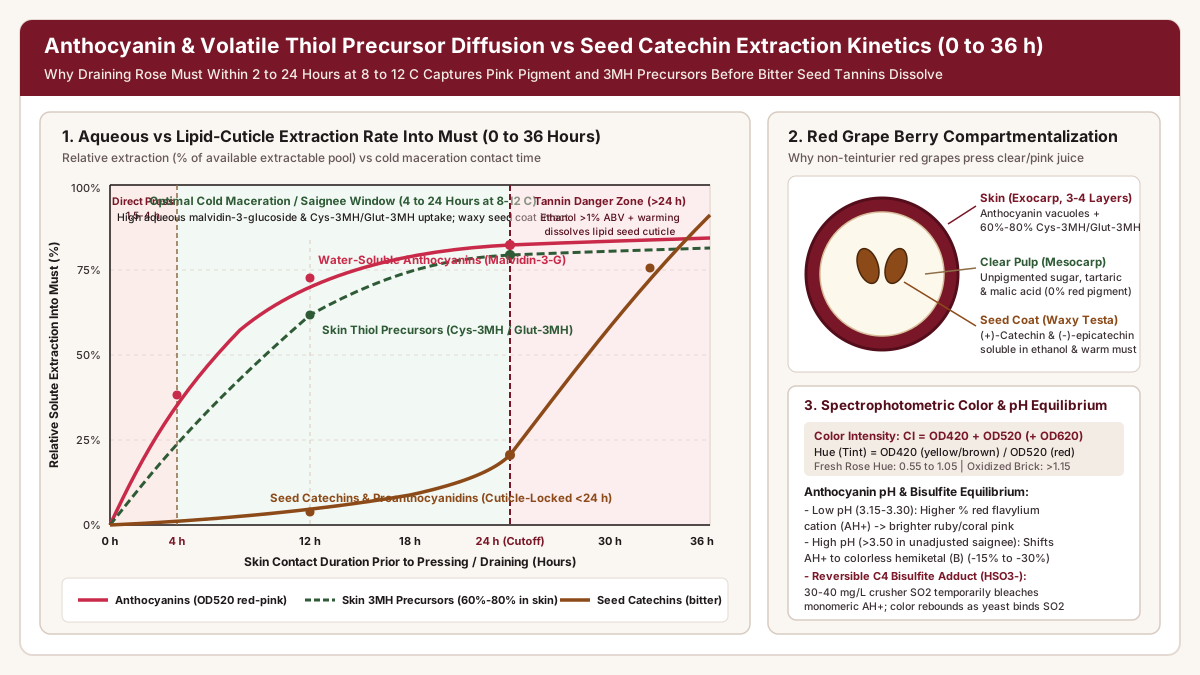
Phase 1: Water-soluble anthocyanin & thiol precursor diffusion (0 to 24 hours at 8 to 12 °C)
Free monomeric anthocyanins in Vitis vinifera (malvidin-3-O-glucoside, alongside peonidin-, delphinidin-, petunidin-, and cyanidin-3-O-glucosides) are polar, water-soluble glycosides stored in solution inside the vacuoles of the outer 3 to 4 hypodermal skin cell layers. Once crushing or pressing ruptures those cell membranes, anthocyanins diffuse rapidly into cold, zero-ethanol aqueous juice (8 to 12 °C) via Fickian concentration-gradient diffusion during the first 2 to 12 hours, reaching an extraction plateau or inflection point between 18 and 24 hours.
Simultaneously, odorless varietal thiol precursors - S-3-(hexan-1-ol)-L-cysteine (Cys-3MH) and S-3-(hexan-1-ol)-glutathione (Glut-3MH), of which 60% to 80% are localized in the grape skins rather than the pulp - leach into the cold juice alongside skin-bound monoterpene glycosides and protective polysaccharides.
Phase 2: Lipid-cuticle and ethanol-driven seed catechin extraction (>24 hours or >1% ABV)
By contrast, bitter, astringent flavan-3-ol monomers ((+)-catechin, (-)-epicatechin, and (-)-epicatechin-3-O-gallate) and condensed proanthocyanidins inside the seed coat (testa) are encapsulated by a hydrophobic, waxy lipid cuticle. In cold water (8 to 12 °C, 0% ABV), seed catechin extraction remains negligible during the first 12 to 18 hours.
However, seed tannin extraction accelerates sharply after 24 hours or as soon as yeast begins converting sugar into ethanol (>1% to 2% ABV) and fermentation heat rises above 16 to 18 °C. Ethanol acts as an organic co-solvent that dissolves the waxy seed cuticle, releasing monomeric catechins into the must. In a delicate rosé lacking the high polymeric anthocyanin buffer of a full red wine, excess catechins (>40 to 50 mg/L, TPI > 22) cause two defects: harsh metallic bitterness on the finish and rapid oxidative browning (OD420 surge). Pressing or draining within 2 to 24 hours at 8 to 12 °C harvests the steep early rise of the anthocyanin and thiol precursor curves while cutting off extraction before the seed catechin curve turns upward.
Spectrophotometric color metrics (OD420, OD520, OD620) and pH equilibrium
Enological laboratories quantify rosé color in a 10 mm (1 cm) optical pathlength quartz cuvette after membrane filtration (0.45 µm) using three wavelengths defined by the International Organisation of Vine and Wine (OIV) and Glories method:
OD420(420 nm absorbance): Measures yellow, orange, and brown pigments (oxidized catechins, quinone polymers, and xanthylium pigments).OD520(520 nm absorbance): Measures red-pink monomeric flavylium anthocyanins (AH+).OD620(620 nm absorbance): Measures blue-purple quinoidal base (A) and polymeric co-pigment complexes.
From these three readings, Color Intensity (CI) and Hue / Tint (H) are calculated as:
CI (2-wavelength) = OD420 + OD520
CI (3-wavelength OIV) = OD420 + OD520 + OD620
Hue (Tint) = OD420 / OD520
- Worked Spectrophotometric Example (Pale Provence Direct-Press vs Oxidized Maceration Rosé):
- Sample A (Fresh Direct-Press Grenache/Cinsault Rosé at pH 3.22):
OD420 = 0.110 AU,OD520 = 0.130 AU,OD620 = 0.015 AU.CI (OIV) = 0.110 + 0.130 + 0.015 = 0.255 AU(within the0.15 to 0.35 AUdirect-press specification).Hue = 0.110 / 0.130 = 0.846(bright salmon-pink with balanced yellow/red ratio). - Sample B (Oxygen-Damaged Saignée Rosé at pH 3.58):
OD420 = 0.340 AU,OD520 = 0.260 AU,OD620 = 0.040 AU.CI (OIV) = 0.340 + 0.260 + 0.040 = 0.640 AU.Hue = 0.340 / 0.260 = 1.308(>1.15oxidation threshold; brownOD420polymers dominate redOD520anthocyanins, giving an orange-brick appearance).
- Sample A (Fresh Direct-Press Grenache/Cinsault Rosé at pH 3.22):
In aqueous solution, monomeric anthocyanins exist in a pH- and sulfite-dependent equilibrium between the red flavylium cation (AH+, pKa ~ 2.6 to 2.8) and the colorless carbinol/hemiketal pseudobase (B):
% Flavylium (AH+ in simple aqueous buffer) = 100 / (1 + 10^(pH - pKa))
At pH 3.15 (assuming pKa = 2.70), 10^(3.15 - 2.70) = 2.818, so 100 / 3.818 = 26.2% of free monomeric anthocyanins sit in the visible red AH+ form. At pH 3.55 (uncorrected saignée), 10^(3.55 - 2.70) = 7.079, so only 100 / 8.079 = 12.4% remain in the red AH+ form - cutting visible red intensity by more than half before accounting for co-pigmentation!
EU Regulation (EU) 2019/934 prohibition on blending red and white wine (coupage)
A widespread consumer misconception is that rosé wine is made by mixing finished white wine with a small percentage of red wine. Under Commission Delegated Regulation (EU) 2019/934 (Article 7 and Annex I, Part D - “Coupage”), supplementing Regulation (EU) No 1308/2013:
- Strict Prohibition on Still Rosé Blending: The coupage (blending) of a white table wine with a red table wine cannot produce a rosé wine, and European still PDO / AOC (Appellation d’Origine Contrôlée, including Côtes de Provence, Tavel, Bandol, Sancerre Rosé, and Rioja Rosado) product specifications forbid mixing red and white wines to make still rosé. All still European PDO/AOC rosés must derive their pink color from red-grape skin contact during pressing, maceration, or saignée. (Co-fermenting whole or crushed white grapes alongside red grapes in the same press or fermenter - such as up to
20%Rolle/Vermentino, Ugni Blanc, or Clairette in Côtes de Provence - is permitted because the grapes are vinified together rather than blended as finished wines). - The AOC Champagne Rosé d’Assemblage Exception: Regulation (EU) 2019/934 explicitly preserves traditional exceptions where a sparkling PDO specification authorizes blending - most notably AOC Champagne (Rosé d’Assemblage), where producers legally blend
5% to 15%still red Pinot Noir or Pinot Meunier wine (Coteaux Champenois) into a white base cuvée before the second in-bottle fermentation (prise de mousse). - New World & Home Winemaking Rules: Outside the European Union (including the United States under
27 CFR Part 4, Australia, and New Zealand) and in non-commercial home batches, blending white and red wine is legally permitted for still blush or table rosé, though quality-focused producers avoid post-fermentation red additions because aged red wine introduces seed tannins (TPI > 20) and aldehydic polymers that flatten crisp white-wine aromatics.
Why does rosé juice require cold settling (débourbage) to 80-150 NTU before fermentation?
Immediately after draining from a cold soak or exiting a pneumatic press, raw pink juice carries 300 to >800 NTU (Nephelometric Turbidity Units) of suspended gross juice lees (bourbes): ruptured skin fragments, vineyard dust, elemental sulfur residues from vineyard sprays, bound tyrosinase enzymes, and lipid-rich cuticular wax.
Whereas red wine ferments directly on its skins and gross solids, how rosé wine is made follows the strict pre-fermentation clarification step of how white wine is made, known as cold settling (débourbage):
- Chilling & Pectolytic Enzyme Hydrolysis (
4 to 8 °Cfor12 to 24 hours): Chill the freshly pressed or bled pink juice immediately to4 to 8 °C (39 to 46 °F)(<= 10 °Cin 5-gallon carboys inside a chest refrigerator) under aCO2orN2headspace blanket for12 to 24 hours(24 to 48 hourswithout enzyme). Dose1 to 3 g/hL(0.04 to 0.11 g/gal) of a liquid or granular rosé/white pectolytic enzyme (pectinase, such as Lallzyme Cuvée Blanc, Lafase Clarification, or Scottzyme Pec5L). Grape pectins form a protective colloidal hydrogel (alpha-1,4-galacturonanchains) that keeps fine particles suspended by electrostatic repulsion; pectinase cleaves those chains within2 to 4 hourseven at5 to 8 °C, allowing heavy solids to compact cleanly at the bottom of the tank. - Optional Cold Stabulation (Stabulation sur Bourbes à Froid): In high-end Provence-style cellars, prior to adding pectinase and racking, winemakers optionally hold the sulfited post-press juice on its fine juice lees at
0 to 4 °C (32 to 39 °F)for4 to 10 days, resuspending the fine lees daily withN2orCO2gas pulses. Cold stabulation extracts+30% to +50%more skin-derived thiol precursors (Cys-3MH,Glut-3MH), native glutathione, and mannoproteins into the liquid before final settling. - Racking to the
80 to 150 NTUTarget Window: Rack the clarified pink juice off the compacted gross sediment cake into the fermentation vessel once turbidity measures80 to 150 NTU(60 to 100 NTUfor thiol-focused styles using low-turbidity-tolerant yeasts such as Zymaflore X5 or Lalvin QA23). In a small home cellar without a nephelometer,80 to 150 NTUcorresponds to juice that has dropped a distinct15 to 30 mmcompact mud layer after18 to 24 hoursat6 °Cand looks slightly opalescent (like diluted grapefruit juice) rather than opaque mud (>250 NTU) or water-bright (<30 NTU).
Failure modes outside the 80 to 150 NTU turbidity window
Violating the 80 to 150 NTU clarification window in either direction damages fermentation kinetics and aroma purity:
- Fermenting Dirty Juice (
>250 NTU): Leaves crushed skin cuticles rich in C18 unsaturated fatty acids (linolenic and linoleic acids), lipoxygenase enzymes, elemental sulfur (S0), and polyphenol oxidase in suspension. During fermentation, yeast alcohol dehydrogenase reduces C6 lipid-oxidation aldehydes (trans-2-hexenalandcis-3-hexenal) into heavy vegetal C6 alcohols (1-hexanol,cis-3-hexen-1-ol) that smell of cut grass and crushed green leaves. Simultaneously, yeast reduces elemental sulfur and pesticide residues into hydrogen sulfide (H2S, rotten egg) and mercaptans, while excess particulate nuclei cause violentCO2foaming and elevated fusel alcohols (isoamyl alcohol,isobutanol) that mask delicate fruit esters. - Fermenting Over-Clarified Juice (
<50 NTU): Tightly filtering, centrifuging, or over-fining juice below50 NTUstrips solid-bound ergosterol / phytosterols and long-chain unsaturated fatty acids (oleic acid). Because Saccharomyces cerevisiae cannot synthesize sterols anaerobically onceCO2displaces oxygen, sterol-starved yeast cell membranes turn rigid and leaky under ethanol stress at cool temperatures (12 to 14 °C). This causes sluggish or stuck fermentations and forces the yeast to overproduce volatile acidity (acetic acid>0.5 to 0.7 g/L) via the pyruvate dehydrogenase bypass. If juice settles below50 NTU, add10 to 25 g/hLof cellulose/yeast-hull turbidity builder or rehydrate yeast with sterol-enriched Go-Ferm Sterol Flash (30 g/hL).
What is the best wine making yeast and temperature for 12-16 °C rosé and white fermentation?
Once clarified to 80 to 150 NTU, rosé must is fermented cool at 12 to 16 °C (54 to 61 °F). As documented by the Australian Wine Research Institute (AWRI) and Scott Laboratories, fermentation temperature and strain genetics jointly determine whether a rosé smells of vibrant pink grapefruit, passionfruit, and wild strawberry or finishes flat and neutral.
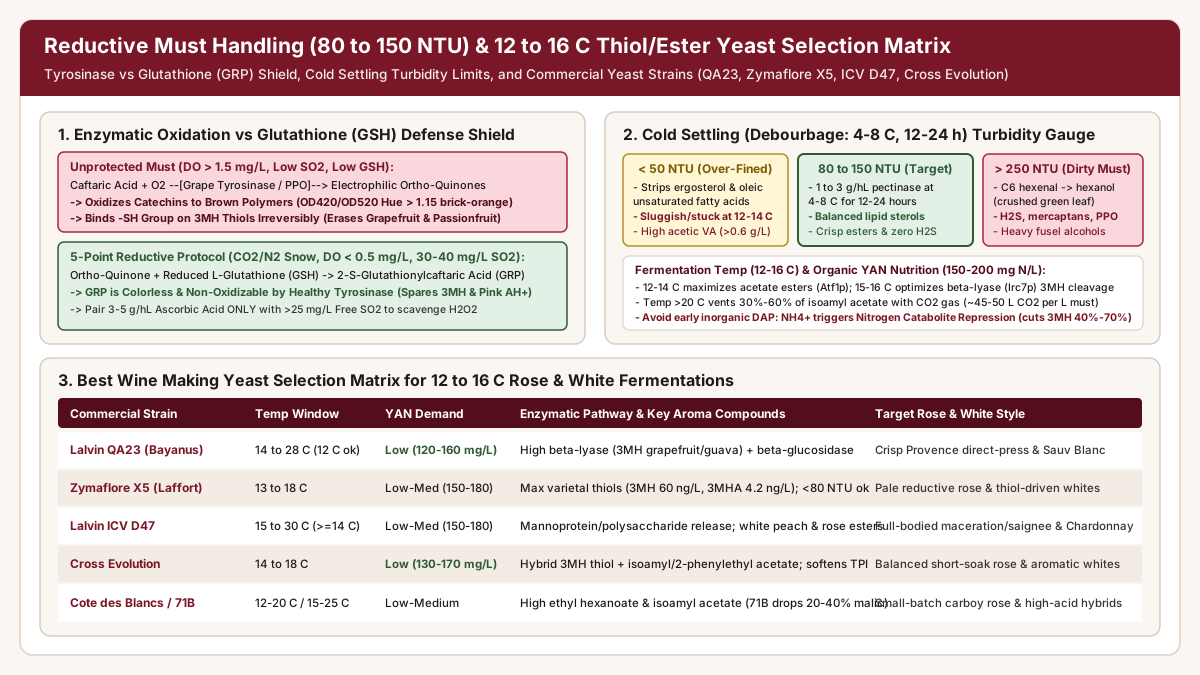
Why temperatures above 20 °C strip 30% to 60% of volatile rosé esters
Alcoholic fermentation is strongly exothermic: converting 180 g (1 mole) of hexose sugar into 92 g ethanol and 88 g CO2 releases approximately 100 kJ (23.9 kcal) of heat, enough to raise an uncooled must’s temperature by ~1.1 to 1.3 °C for every 1 °Brix fermented. Simultaneously, each liter of must fermenting at 22 °Brix (~220 g/L sugar) evolves 45 to 50 liters of escaping CO2 gas.
When fermentation temperature rises above 18 to 20 °C (64 to 68 °F), two losses occur:
- Vapor-Liquid Stripping of Acetate Esters: Low-molecular-weight acetate esters (particularly isoamyl acetate, boiling point
142 °C, high Henry’s Law volatility coefficient in hydroalcoholic solution) partition into escapingCO2bubbles and vent out the airlock, stripping30% to 60%of synthesized fruit esters compared to a13 °Cfermentation. - Intracellular Enzyme & Ehrlich Pathway Shift: Above
20 °C, yeast down-regulates alcohol acetyltransferase activity relative to esterase hydrolysis and channels branched-chain amino acids via the Ehrlich pathway into heavy higher alcohols (fusels) rather than floral esters.
Within the 12 to 16 °C cool window, winemakers tune the thermostat by 2 to 3 °C depending on which aroma family they prioritize:
12 to 14 °C (54 to 57 °F)for Maximum Acetate & Ethyl Esters: Maximizes expression of yeast Alcohol Acetyltransferases (Atf1p and Atf2p) and minimizes physicalCO2stripping, favoring pear-drop, banana, red-berry, and rose-petal esters.15 to 16 °C (59 to 61 °F)for Maximum Varietal Thiol Cleavage (3MH/3MHA): Slightly warmer cool fermentation optimizes yeast plasma-membrane amino acid/oligopeptide permeases (Gap1p, Opt1p) and intracellular carbon-sulfur (beta)-lyase (Irc7p) enzyme kinetics, maximizing conversion of odorless grape skin precursors into tropical grapefruit and passionfruit thiols.
Biochemical aroma pathways: polyfunctional volatile thiols vs fermentation esters
Choosing the best wine making yeast for rosé or white wine requires matching the grape variety’s precursor pool to the yeast strain’s enzymatic machinery:
| Aroma Compound | Sensory Descriptor | Odor Threshold in Wine | Biochemical Precursor & Yeast Enzymatic Pathway |
|---|---|---|---|
3-Mercaptohexan-1-ol (3MH) |
Pink grapefruit zest, passionfruit, guava, citrus peel | 60 ng/L (parts per trillion) |
Skin-bound Cys-3MH and Glut-3MH imported via Gap1p/Opt1p permeases and cleaved by yeast beta-lyase (Irc7p) (0.5% to 5.0% molar conversion) |
3-Mercaptohexyl acetate (3MHA) |
Boxwood, passionfruit, tropical gooseberry | 4.2 ng/L (14x more potent than 3MH) |
Intracellular acetylation of newly cleaved 3MH + acetyl-CoA catalyzed by yeast Alcohol Acetyltransferase (Atf1p) |
Isoamyl acetate |
Pear drop, banana, fresh red candy | 30 µg/L (parts per billion) |
Condensation of isoamyl alcohol (from leucine) + acetyl-CoA via Atf1p / Atf2p at 12 to 15 °C |
2-Phenylethyl acetate |
Rose petal, raspberry blossom, honeyed floral | 250 µg/L |
Condensation of 2-phenylethanol (from L-phenylalanine) + acetyl-CoA via Atf1p (stimulated by organic amino nitrogen) |
Ethyl hexanoate & Ethyl octanoate |
Wild strawberry, crisp red apple, pineapple, white peach | 5 to 14 µg/L |
Medium-chain fatty acyl-CoA + ethanol esterification via Eht1p and Eeb1p acyltransferases at cool temperatures |
Commercial yeast strain comparison matrix for rosé and white wine
No single yeast is universal across all grape varieties and cellar temperatures. The five commercial Saccharomyces selections below represent the industry standard across micro-wineries and home cellars:
| Commercial Yeast Strain | Species & Killer Factor | Optimal Temp Range | Nitrogen (YAN) Demand | Enzymatic Activity & Mouthfeel Profile | Primary Rosé & White Wine Application |
|---|---|---|---|---|---|
| Lalvin QA23 (Lallemand / Univ. of Aveiro) | S. cerevisiae bayanus | Killer K2+ |
14 to 28 °C (reliable down to 12 °C with Go-Ferm) |
Low (120 to 160 mg N/L) |
High beta-lyase (3MH grapefruit/passionfruit cleavage) AND high beta-glucosidase (terpene release); low H2S/SO2 |
Crisp Provence-style Grenache, Syrah, and Pinot Noir rosés; Sauvignon Blanc, Albariño, and Pinot Grigio whites |
| Zymaflore X5 (Laffort) | S. cerevisiae hybrid | Killer + |
13 to 18 °C |
Low to Medium (150 to 180 mg N/L) |
Engineered for maximum varietal thiol revelation (3MH, 3MHA) + crisp citrus esters; tolerates low turbidity (<60 to 80 NTU) |
Tightly settled, ultra-pale reductive direct-press rosés and thiol-driven Sauvignon Blanc / Colombard |
| Lalvin ICV D47 (Lallemand) | S. cerevisiae | Killer K2+ |
15 to 30 °C (sluggish below 13 to 14 °C) |
Low to Medium (150 to 180 mg N/L) |
Releases high polysaccharides and mannoproteins on fine lees; builds ripe peach, citrus, and rose-petal esters with round volume | Fuller-bodied skin-macerated or saignée rosés (Syrah, Mourvèdre, Sangiovese) and lees-aged Chardonnay or Viognier |
| Cross Evolution (Lallemand) | S. cerevisiae breeding cross | Competitive | 14 to 18 °C |
Low (130 to 170 mg N/L) |
Dual beta-lyase thiol (3MH) + acetate ester (2-phenylethyl acetate) producer; high mannoproteins mask phenolic bitterness |
Direct-press and short-maceration rosés needing both floral aromatics and mid-palate softness |
| Red Star Côte des Blancs (Epernay II) / Lalvin 71B | S. cerevisiae | Neutral / Sensitive | 12 to 20 °C (CdB) / 15 to 25 °C (71B) |
Low to Medium (140 to 180 mg N/L) |
High isoamyl acetate and ethyl hexanoate (“ester bomb”: wild strawberry, pear); 71B also metabolizes 20% to 40% of malic acid |
Small-batch carboy rosés, off-dry blush styles, and high-acid cool-climate hybrids (Marquette, Chambourcin, Maréchal Foch) |
Organic YAN nutrition (150-200 mg N/L) and why early DAP suppresses thiols
Yeast Assimilable Nitrogen (YAN, the sum of primary amino nitrogen [PAN] from free alpha-amino acids plus ammoniacal nitrogen from ammonium ions [NH4+]) governs both fermentation kinetics and thiol transport. For a 21.0 to 22.5 °Brix rosé or white must fermented at 12 to 16 °C, target 150 to 200 mg N/L total YAN (Penn State Extension; Scott Laboratories).
Critical biochemical trap - Nitrogen Catabolite Repression (NCR) from inorganic DAP:
Adding heavy doses of inorganic Diammonium Phosphate (DAP, (NH4)2HPO4, 21% elemental nitrogen) at inoculation or during the first third of fermentation floods the must with free ammonium (NH4+) ions. High extracellular NH4+ triggers Nitrogen Catabolite Repression (NCR) inside Saccharomyces cerevisiae, which transcriptionally down-regulates and internalizes the general amino acid permease (Gap1p) and oligopeptide transporter (Opt1p). Because grape skin thiol precursors (Cys-3MH and Glut-3MH) enter the yeast cell exclusively through those amino acid and peptide transport channels, early DAP additions lock the precursors outside the cell and slash 3MH and 3MHA aroma yield by 40% to 70%, while triggering a rapid exothermic heat spike.
Execute a three-stage organic nutrition protocol instead:
- Yeast Rehydration & Cold Acclimatization (
0 °Brixdrop): Suspend25 to 30 g/hL(0.95 to 1.15 g/gal) of sterol- and micronutrient-rich Go-Ferm Protect Evolution or Go-Ferm Sterol Flash in20xits weight of clean35 to 37 °Cwater (15 to 20 °Cdirectly for Sterol Flash), pitch20 to 25 g/hL(0.75 to 0.95 g/gal) of active dry yeast, wait15 to 20 minutes, and then step-cool the slurry in5 °Cincrements every15 minutesby adding cold must until the starter sits within5 to 8 °Cof the12 to 14 °Ctank temperature. Pitching37 °Cyeast directly into12 °Cjuice causes thermal cold-shock that kills>50%of the viable cell population. - First Nutrient Addition at Lag Exit (
2 to 3 °Brixdrop,18 to 36 hpost-pitch): Dose20 to 30 g/hL(0.75 to 1.15 g/gal) of 100% organic yeast-autolysate nutrient (Fermaid O, supplying~4%organic alpha-amino nitrogen with zero inorganicNH4+). Organic amino acids keep Gap1p/Opt1p thiol transporters fully open and supply L-phenylalanine and L-leucine carbon skeletons for2-phenylethyl acetate(rose petal) andisoamyl acetatesynthesis. - Second Nutrient Addition at
1/3Sugar Depletion (6 to 8 °Brixdrop): Dose a second15 to 20 g/hLof Fermaid O (or a blended nutrient such as Fermaid K only after the main thiol uptake phase has passed). Never add any nitrogen after1/2sugar depletion (~10 to 11 °Brix), as ethanol inhibits amino acid permeases and unconsumed nitrogen feeds post-fermentation spoilage microbes.
How do reductive winemaking and malolactic suppression prevent browning and flat acidity?
Pale pink color (OD520) and volatile thiols (3MH at 60 ng/L) are the two most oxygen-sensitive components in winemaking. Protecting them from crush through bottle requires controlling enzymatic oxidation before fermentation and bacterial malolactic activity afterward.
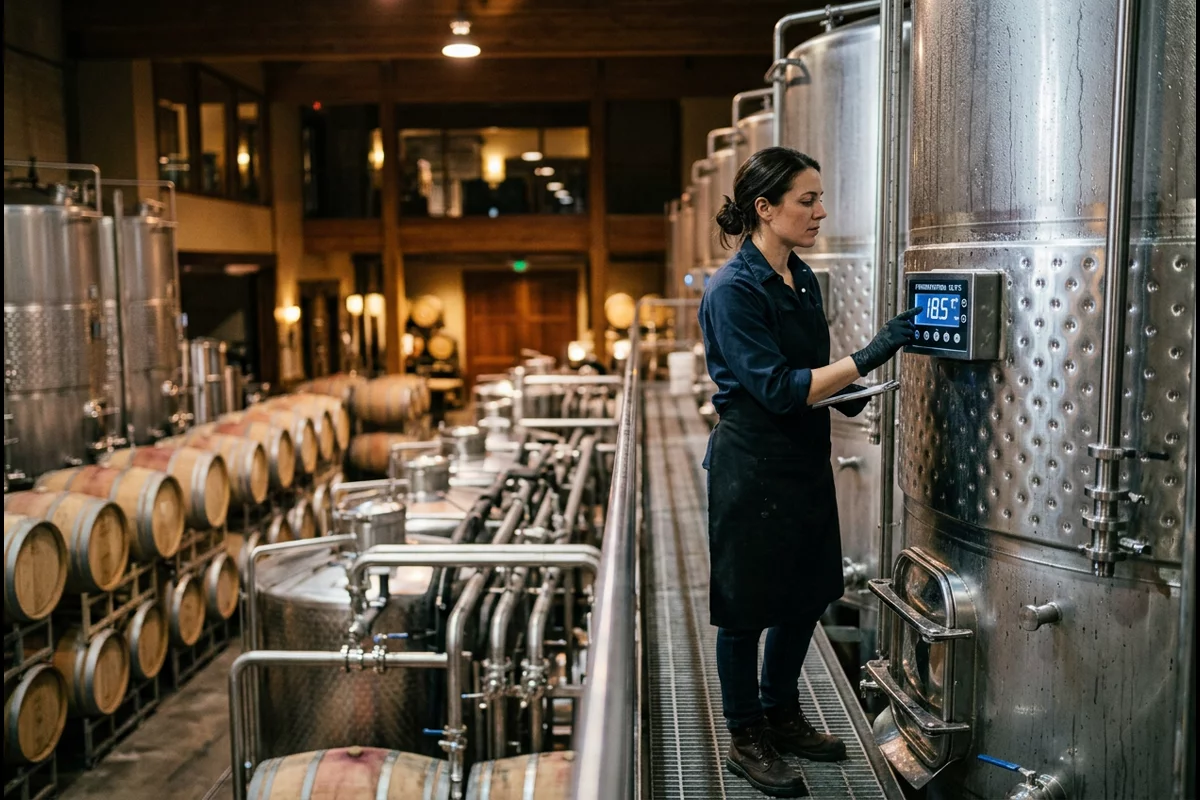
Enzymatic oxidation: grape tyrosinase (PPO) vs the glutathione (GRP) shield
In healthy grapes, the copper-containing enzyme tyrosinase (catechol oxidase / Polyphenol Oxidase, PPO) is bound to plastid membranes inside the berry. When crushing and pressing expose juice to atmospheric oxygen (O2), tyrosinase rapidly oxidizes grape hydroxycinnamic acids - primarily caftaric acid (trans-caffeoyltartaric acid) and coutaric acid - consuming 1 mg/L of dissolved O2 every 2 to 5 minutes to generate highly reactive, electrophilic ortho-quinones (caftaric acid o-quinone).
If left unchecked in unprotected rosé must, ortho-quinones cause three irreversible losses:
- Coupled Oxidation of Catechins to Brown Polymers: Ortho-quinones oxidize
(+)-catechinand(-)-epicatechininto yellow-brown polymers, drivingOD420absorbance upward and shifting Hue (OD420 / OD520) past1.15into brick-orange or brown. - Irreversible Nucleophilic Trapping of Volatile Thiols (
3MH): Electrophilic ortho-quinones react via 1,4-Michael addition with the free sulfhydryl (-SH) group of3MHand3MHA, permanently erasing grapefruit and passionfruit aromatics. - Oxidative Degradation of Monomeric Anthocyanins: Quinones cleave and polymerize free
malvidin-3-glucoside, stripping fresh pink color.
The natural biochemical defense against ortho-quinones is reduced L-glutathione (GSH, gamma-L-glutamyl-L-cysteinylglycine), a tripeptide present in healthy grapes (10 to 60 mg/L) and yeast cells that carries a sacrificial nucleophilic thiol (-SH) group. Reduced GSH intercepts caftaric acid o-quinone via nucleophilic addition to form 2-S-glutathionylcaftaric acid, known in enology as the Grape Reaction Product (GRP):
Caftaric Acid + 1/2 O2 –[Tyrosinase / PPO]–> Caftaric o-Quinone + H2O
Caftaric o-Quinone + Reduced Glutathione (GSH) –> 2-S-Glutathionylcaftaric Acid (GRP, colorless)
Because GRP is colorless and is not a substrate for healthy grape tyrosinase, locking ortho-quinones into GRP halts the browning cascade and spares both monomeric anthocyanins and volatile 3MH thiols. (Note: if fruit is infected with Botrytis cinerea gray mold, fungal laccase is present; unlike tyrosinase, laccase oxidizes GRP, catechins, and anthocyanins directly, resists SO2, and requires immediate flash-pasteurization or 20 to 40 g/hL sacrificial oenological gallotannin + bentonite elimination).
Five-point reductive cellar protocol for rosé and white musts
- Physical Oxygen Exclusion at Crush & Press (
DO < 0.5 to 1.0 mg/L): Harvest fruit cold (8 to 12 °C) and blanket the crusher hopper, press pan, and receiving vessel with food-grade dry ice (CO2snow/pellets,0.5 to 1.5 kg per 100 kgof grapes) or purge lines with compressed Nitrogen (N2) or Argon (Ar). BecauseCO2(44.01 g/mol) and Argon (39.95 g/mol) are1.52xand1.38xdenser than air (28.97 g/mol), they form a heavy gas blanket over the juice surface that holds dissolved oxygen below0.5 to 1.0 mg/L. - Crusher/Press Sulfite Addition (
30 to 40 mg/LTotalSO2) & Reversible Anthocyanin Bleaching: Add30 to 40 mg/LSO2(50 to 70 mg/Lpotassium metabisulfite [KMBS]) at the crusher or press pan. Sulfite inhibits60% to 85%of tyrosinase activity and reduces ortho-quinones back to colorless phenols.- Why Newly Sulfited Rosé Juice Looks Temporarily Pale: Bisulfite ions (
HSO3-) bind reversibly at theC4carbon of the red flavylium cation (AH+) to form a colorlessC4anthocyanin-bisulfite sulfonic acid adduct. Do not extend skin maceration time in panic when sulfited press juice looks pale! During alcoholic fermentation, yeast produces15 to 40 mg/Lof acetaldehyde, which bindsHSO3-with a dissociation constant~100xtighter (Kd ~ 1.5 x 10^-6 M) than monomeric anthocyanins (Kd ~ 1.0 x 10^-4 M), stripping bisulfite off the pigment so the vibrant pink color rebounds. Avoid exceeding45 to 50 mg/LSO2at crush, which delays yeast onset and increases permanent bleaching.
- Why Newly Sulfited Rosé Juice Looks Temporarily Pale: Bisulfite ions (
- L-Ascorbic Acid (
3 to 5 g/hL) Strictly Paired with FreeSO2: Adding30 to 50 mg/L(3 to 5 g/hL) L-ascorbic acid to grapes or press juice scavenges dissolvedO2nearly1,000xfaster thanSO2alone and reduces ortho-quinones instantaneously. However, ascorbic acid oxidation generates dehydroascorbic acid plus1 moleof hydrogen peroxide (H2O2). Ascorbic acid must always be accompanied by>= 25 to 35 mg/LfreeSO2so bisulfite immediately scavenges theH2O2into sulfate (H2O2 + HSO3- -> HSO4- + H2O); adding ascorbic acid without adequateSO2triggers Fenton-reaction peroxide oxidation that destroys color and aroma. - Glutathione-Enriched Inactivated Yeast at Inoculation (
20 to 30 g/hL): Dose20 to 30 g/hL(0.75 to 1.15 g/gal) of glutathione-rich specific inactivated yeast (such as Lallemand Opti-White or Opti-MUM White, within the OIV20 mg/LGSH equivalent limit) into the clarified juice at yeast pitching to replenish the must’s reducedGSHpool and supply antioxidant mannoproteins that stabilize monomeric anthocyanins via co-pigmentation. - Post-Fermentation Fine-Lees Protection & Bottling Gas Specs: Once primary fermentation finishes (
<1.0 g/LRS), rack off any heavy remaining sulfide-prone sediment while optionally keeping clean fine lees for4 to 8 weekswith inert gas protection (see our guide on when to rack wine after primary fermentation). If protein fining is required before bottling, execute a bench trial using our bentonite before or after fermentation guide and keep bentonite doses to the minimum effective rate (15 to 40 g/hL), as negatively charged montmorillonite clay platelets adsorb positively charged red flavylium (AH+) anthocyanins and strip rosé color. Similarly, during tartrate stabilization at-4 to +2 °C(covered in our home cold stabilization guide), expect a5% to 10%pigment drop as potassium bitartrate crystals co-precipitate bound surface pigments. At bottling (detailed in how to bottle wine), maintain800 to 1,200 mg/L(0.8 to 1.2 g/L) dissolvedCO2for crisp sensory lift and keep dissolved oxygen<0.5 mg/L(Total Package Oxygen<1.0 to 1.5 mg/L).
Why over 95% of crisp rosés block malolactic fermentation (MLF)
As explained in the AWRI fact sheet on malolactic fermentation in white and sparkling wines, lactic acid bacteria (principally Oenococcus oeni) decarboxylate sharp dicarboxylic L-malic acid (HOOC-CH2-CH(OH)-COOH, two carboxyl groups) into softer monocarboxylic L-lactic acid (CH3-CH(OH)-COOH, one carboxyl group) and CO2. While standard in full-bodied red wines, more than 95% of commercial and small-batch rosés actively prevent MLF for three biochemical reasons:
- Preventing Titratable Acidity Loss (
-1.5 to -3.0 g/L TA) andpHRise (+0.15 to +0.30): Replacing every1.00 g/Lof malic acid (MW 134.09 g/mol) with0.67 g/Lof lactic acid (MW 90.08 g/mol) removes half the titratable protons from those molecules, dropping wineTAby1.5 to 3.0 g/Land raisingpHby+0.15 to +0.30 units. In a rosé, losing malic acid collapses the bright citrus/red-berry tension into a flat, soapy palate. - Preventing Buttery Diacetyl (
2,3-Butanedione) Aroma Masking: During MLF, Oenococcus oeni co-metabolizes grape citric acid (0.2 to 0.5 g/L) into diacetyl (2,3-butanedione), which has a low sensory threshold of0.2 to 0.9 mg/Lin light aromatic wines. Even0.3 to 0.5 mg/Lof buttery diacetyl masks delicate60 ng/Lgrapefruit thiols (3MH) and strawberry/rose-petal acetate esters. - Preventing
15% to 30%Anthocyanin Color Loss: Raising winepHby+0.20 unitsshifts the monomeric anthocyanin equilibrium away from the red flavylium cation (AH+) toward the colorless hemiketal pseudobase (B), fading visible pink color by15% to 30%. In addition, several indigenous lactic acid bacteria expressbeta-glucosidase enzymes that cleave the stabilizing glucose ring offmalvidin-3-O-glucoside, creating unstable aglycone anthocyanidins that precipitate brown sediment.
Four-step cellar protocol to block MLF and calculate pH-dependent molecular SO2
To guarantee that malic acid remains intact from the end of primary fermentation through bottling (verified via our malolactic fermentation completion and malic acid tests), apply four barriers immediately once specific gravity stabilizes at dryness (SG <= 0.992 to 0.994, <1.0 g/L RS):
- Chill Below
10 to 12 °C (50 to 54 °F): Oenococcus oeni growth stalls below12 °C(AWRI). - Rack Off Gross Yeast Lees Within
3 to 7 Daysof Dryness: Removing heavy lysing yeast cells deprives lactic acid bacteria of amino acid and vitamin B growth factors. - Sulfite to
0.8 mg/LMolecularSO2: As detailed in our winemaking SO2 management and pH calculation guide, antimicrobial protection depends on molecularSO2(>= 0.8 mg/Lrequired to inhibit Oenococcus oeni and aerobic spoilage microbes in rosé and white wines), governed by the Henderson-Hasselbalch equilibrium at25 °C:
Molecular SO2 (mg/L) = Free SO2 (mg/L) / (1 + 10^(pH - 1.8))
Required Free SO2 (mg/L) = Target Molecular SO2 * (1 + 10^(pH - 1.8))
- Worked Sulfite Comparison Across the Three Rosé Extraction Styles (Targeting
0.80 mg/LMolecularSO2):- Direct-Press Rosé at
pH 3.20:1 + 10^(3.20 - 1.8) = 1 + 10^1.40 = 1 + 25.119 = 26.119.Required Free SO2 = 0.80 * 26.119 = 20.9 mg/L(~21 ppmfreeSO2). - Short-Maceration Rosé at
pH 3.35:1 + 10^(3.35 - 1.8) = 1 + 10^1.55 = 1 + 35.481 = 36.481.Required Free SO2 = 0.80 * 36.481 = 29.2 mg/L(~29 ppmfreeSO2). - Uncorrected Saignée Rosé at
pH 3.55:1 + 10^(3.55 - 1.8) = 1 + 10^1.75 = 1 + 56.234 = 57.234.Required Free SO2 = 0.80 * 57.234 = 45.8 mg/L(~46 ppmfreeSO2).
- Direct-Press Rosé at
- Enological Lysozyme (
150 to 250 mg/L) or Fungal Chitosan (20 to 50 g/hL) for High-pH Saignée Lots: Notice in the third calculation above that an uncorrectedpH 3.55saignée rosé requires46 mg/Lof freeSO2(80 to 100+ mg/LtotalSO2) to hit0.8 mg/LmolecularSO2, which causes pungent sulfite aroma and severeC4bisulfite color bleaching. If a saignée rosé finishes abovepH 3.42, supplement a moderate25 to 30 mg/LfreeSO2dose with150 to 250 mg/L(15 to 25 g/hL) enological lysozyme (muramidase, which cleavesbeta-1,4-glycosidicbonds in Gram-positive Oenococcus and Lactobacillus peptidoglycan cell walls; note that lysozyme is a protein and requires bentonite check-trials before bottling) or20 to 50 g/hLvegan fungal chitosan (Aspergillus niger derivative, e.g., Lallemand Bactiless), followed by0.45 µmsterile membrane filtration at commercial bottling.
Diagnostic troubleshooting matrix and batch production record
Use the diagnostic table below to identify and correct color, aroma, and fermentation defects in small-batch (19 to 220 L carboy or variable-capacity stainless tank) and micro-winery rosé lots. Browse the Winemaking category hub and all winemaking and bottling articles for companion cellar protocols.
| Observed Defect in Must or Finished Rosé | Primary Biochemical or Mechanical Root Cause | Preventive or Corrective Cellar Action |
|---|---|---|
Rosé turns orange-brick or salmon-brown (Hue = OD420/OD520 > 1.15) |
Insufficient SO2 (<20 mg/L) or excess O2 (DO > 1.5 mg/L) at crush allowed grape tyrosinase (PPO) to oxidize caftaric acid and catechins; or Botrytis laccase present |
Blanket crush/press with CO2 snow or N2; dose 30 to 40 mg/L SO2 + 20 to 30 g/hL glutathione yeast (Opti-White); fine oxidized brown polymers in juice or wine with 15 to 40 g/hL PVPP (polyvinylpolypyrrolidone) or pea/potato plant protein |
| Newly pressed or sulfited juice looks pale gray-white instead of pink | Reversible C4 nucleophilic addition of bisulfite (HSO3-) to monomeric flavylium (AH+) anthocyanins after 30 to 50 mg/L SO2 addition |
Acidify a 50 mL lab sample to pH 1.5 with HCl or add a drop of 10% acetaldehyde to preview true potential pink color; normal color rebounds naturally during fermentation as yeast acetaldehyde binds HSO3- |
Harsh metallic bitterness and astringent finish (TPI > 20) |
Press pressure exceeded 1.0 to 1.2 bar, skin soak ran >24 hours after ethanol (>1% ABV) began dissolving seed cuticles, or high-pH press cuts were blended in |
Separate press cuts above 0.8 bar; drain cold soak within 2 to 24 hours at 8 to 12 °C; fine bitter catechins post-fermentation with 10 to 30 g/hL PVPP, 2 to 8 g/hL isinglass, or mannoprotein polysaccharides |
Rotten-egg (H2S) or crushed-green-leaf (hexanol) off-aroma |
Juice fermented dirty (>250 NTU) with suspended elemental sulfur and C6 lipid debris, or yeast suffered YAN starvation (<120 mg N/L) |
Cold-settle juice at 4 to 8 °C with 1 to 3 g/hL pectinase to 80 to 150 NTU and rack off gross lees before pitching yeast; feed 150 to 200 mg N/L organic YAN (Fermaid O) in two staggered doses |
| Flat, neutral, or alcoholic profile lacking grapefruit/strawberry lift | Fermentation temperature ran warm (>20 °C), venting 30% to 60% of acetate esters, OR early inorganic DAP addition triggered Nitrogen Catabolite Repression (40% to 70% 3MH loss) |
Hold fermentation at 12 to 16 °C using a glycol jacket, ice-water bath, or temperature-controlled chest fridge; pitch Lalvin QA23, Zymaflore X5, or Cross Evolution with Go-Ferm Sterol Flash and Fermaid O |
Buttery aroma (diacetyl > 0.3 mg/L), +0.20 pH rise, and 20% color fade |
Spontaneous malolactic fermentation (Oenococcus oeni) occurred post-fermentation due to warm storage (>16 °C) and low molecular SO2 (<0.5 mg/L) |
Chill wine below 10 to 12 °C immediately after dryness, rack off gross yeast lees, adjust free SO2 to 0.8 mg/L molecular SO2, or dose 150 to 250 mg/L lysozyme / 20 to 50 g/hL chitosan in high-pH lots |