Wine grapes are ready to pick when a sample mixed from shade, part shade, and full sun shows the sugar, acid, and flavor you planned for that wine, and you can receive the fruit. Picking on color alone is how fruit comes in too early, and grapes do not ripen after they leave the vine.
A wine variety is usually harvested as a block, after sugar and total acid are measured. Fresh-eating grapes can be taken cluster by cluster when that cluster looks and tastes ready. This page gives you a blank record for the wine job. It does not give a national calendar or a Brix cutoff.
The sampling walk is Whicher Ridge’s published method (Cathy Howard, Western Australia, 9 February 2020). The split between wine grapes and fresh-eating grapes, and the Minnesota season, is from University of Minnesota Extension’s cold-climate grape page. The warning that color is not ripeness is from University of Illinois Extension (Rhonda Ferree, 30 August 2018), written for home Concord and Niagara grapes.
Key points:
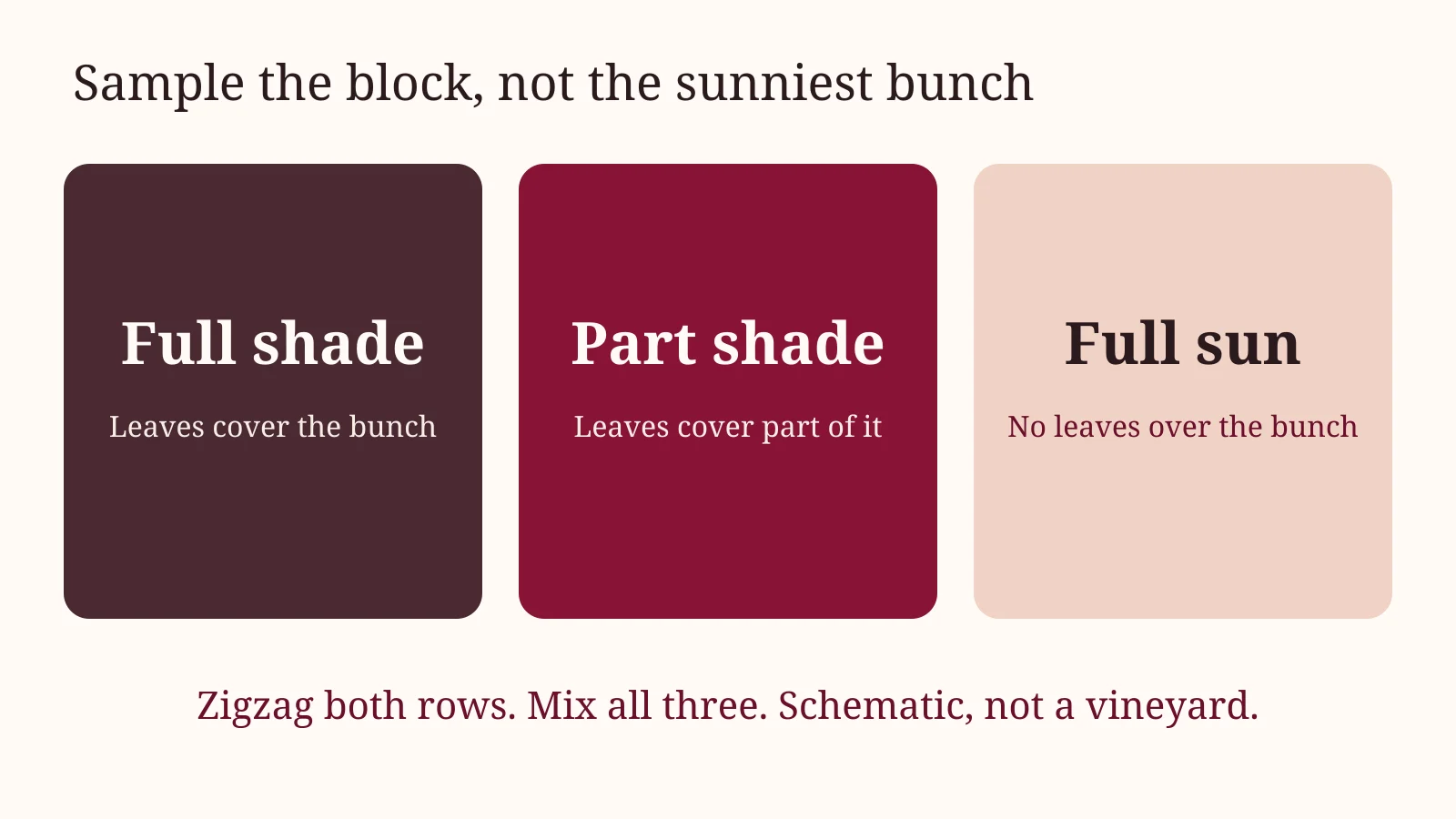
- Sample the block, not the best bunch. Mix full shade, part shade, and full sun, and walk the length of the rows.
- Write sugar, pH, and total acid as separate cells. A refractometer estimates sugar. A pH meter and a titrator answer different questions about acid.
- Color, seed color, and a softer berry are clues. Illinois Extension says many cultivars turn color before the flavor sweetens.
- The forecast and the cellar belong on the same row as the readings. Weather for the next one to two weeks, and whether you can take the fruit today, change the decision.
How is picking wine grapes different from picking table grapes?
Pick a wine variety as a block when the mixed sample matches the wine you are making. Pick fresh-eating grapes cluster by cluster when each cluster meets an eating standard, including color.
University of Minnesota Extension says that when grapes are harvested for wine, single varieties are usually harvested all at once. Fresh-eating grapes, on the same page, can be harvested as clusters ripen and meet ripening goals that include looking at fruit color. In Minnesota, many varieties start growth in May, the earliest-ripening varieties are harvested in mid-August, and later-ripening varieties may hang until mid-to-late October. That window is a cold-climate description, not a date for every US state.
Illinois Extension, writing on 30 August 2018 about Concord and Niagara grapes in central Illinois, says a color change is not always the best sign of ripeness. Many cultivars turn a ripe color before the flavor sweetens. At full ripeness the whitish bloom on the berries is more noticeable, and seed color changes from green to brown. Most grapes become slightly less firm. For those home grapes, the page calls tasting the surest check. It also says grapes do not ripen further once they are cut from the vine. That taste test is for fruit you will eat. It does not replace a sugar and acid reading on wine fruit.
| Job | What you pick | What the cited page uses | What it does not give you |
|---|---|---|---|
| Wine grapes, one variety | The block, usually at one time | Sugar by refractometer; pH by meter; total acid by titration (Minnesota). Flavor on a mixed sample (Whicher Ridge) | A US harvest month, or a Brix number that means “pick” |
| Fresh-eating grapes | Clusters as they ripen | Color, bloom, seed color, a softer berry, and taste (Illinois, home Concord and Niagara, 2018) | A wine sugar and acid record |
Takeaway: Use the wine row when the fruit will be fermented. Use the Illinois taste checks only for fruit you will eat.
How do you sample one block?
Walk the rows and mix bunches from three canopy positions, then measure the juice. Cathy Howard at Whicher Ridge describes the walk she uses for each wine. It is one winery’s method. It is not a US rule, and the article does not publish a sugar target.
She takes a bucket and snips into each vineyard block. She walks up and down several rows in a zigzag, snipping bunches at random along the whole length of the rows. She mixes three positions: bunches in full shade inside the canopy, covered by leaves; bunches only partly shaded; and bunches in full sun. Write down which of those positions you actually reached, including a position that was scarce in that block. She tastes berries as she walks. She analyses the collected juice for sugar and acidity and treats that pair of numbers as the average ripeness of the block, not as the ripest berry she found. She repeats the walk a week later to see the rate, then weekly until that block is picked. She uses the first snapshot, with the tasting, to judge how many weeks remain. That judgment is hers, on her blocks. The part you can copy is the repeat: same positions, a week apart, written down.
She names three reasons bunches in one variety still differ: soil changes across the vineyard, bunches get different amounts of sunlight, and vines differ in vigor.
Illinois Extension makes a separate point about light, for home grapes: the fruit does not need direct sun on the berries to ripen and color. The leaves make the sugars that move into the fruit. Keep both statements. Leaf light feeds the vine. Bunch position still changes what is in the bucket, which is why the Whicher Ridge walk refuses to sample only the sunlit fruit.
A University of Minnesota page on how to sample was, in the material behind this article, only a video entry. The video was not used. This page does not invent a berry count or a step count from it.
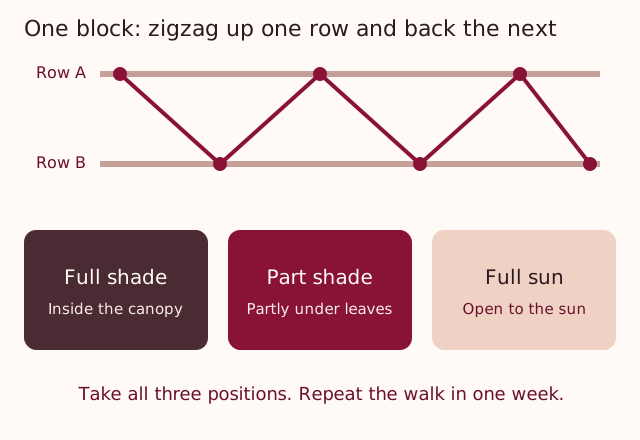
Takeaway: One block, three canopy positions, both directions of the rows, then the same walk next week.
What goes on the harvest record?
Write your own readings in the blank row. Nothing on this site is a measured harvest, and an empty cell means that item was not measured.
| Field | What you write | Where the field comes from |
|---|---|---|
| Block, variety, date | Your names and the sample date | So next week’s row is the same block |
| Sample positions | Shade, part shade, full sun, and that you walked the rows | Whicher Ridge, 2020 |
| Sugar | The reading, the unit, and the tool | University of Minnesota Extension: a refractometer estimates sugar |
| pH | The pH reading | University of Minnesota Extension: a pH meter |
| Total acid | The titration result and its unit | University of Minnesota Extension: a titrator. This is not the pH |
| Fruit | Color, seed color, firmness, flavor, splits, insects | Color, seeds, and firmness: Illinois Extension, 2018. Flavor: Whicher Ridge |
| Weather | The forecast for the next 1–2 weeks, and the date you checked it | Whicher Ridge includes that forecast in the pick |
| Cellar | Whether tanks, people, and crates can take this block today | Your constraint. The sources publish no capacity figure |
| Decision | Pick or wait, and the reason in one sentence | The point of keeping the sheet |
| Block, variety, date | Sample positions | Sugar, pH, total acid | Fruit, weather, cellar, decision |
|---|---|---|---|
Copy the header into a notebook or a spreadsheet and add a row each week for that block. Leave a cell blank when you did not measure it. Do not borrow a number from another vineyard to fill the gap.
Example sugar and pH ranges from a Connecticut home-winemaking fact sheet are already summarized on home winemaking for beginners. They plan a batch after you have fruit. They are not a signal to harvest a block, and this page does not reprint them as a national standard.
Takeaway: If the cell is empty, you do not have that reading yet. Do not pick from a row you have not filled.
When do weather and the cellar change the decision?
Change the plan when the forecast or the receiving line no longer matches the fruit, and write the reason on the same row as the numbers.
Whicher Ridge bases the pick on four things: the sugar, the acid, the flavors in the grapes, and the weather over the next one to two weeks. The page says heavy rain can spoil ripe grapes, and that a machine harvest is one way to bring fruit in before rain arrives. It also says grapes do not continue to ripen after they are picked. Picked too early, the wine can be tart and overly herbaceous. Picked too late, acid is low, sugar is high, and the alcohol ends up high. Those sentences describe that winery’s early and late picks. They are not a result this site measured.
| What the row shows | What you can do with it | What it is not |
|---|---|---|
| Color changed, sugar and acid still blank | Keep sampling. Illinois: color often arrives before flavor | A pick |
| Sugar, acid, and flavor recorded on a mixed sample | Compare with last week’s row on the same block | A universal Brix or pH target |
| Rain in the next 1–2 weeks, fruit already at the style you want | Whicher Ridge treats heavy rain as a reason ripe fruit can be lost | An order to pick before every shower |
| Readings look ready, and the cellar line says no | Wait, or pick only what you can receive | A published tank capacity |
Time of day on the Whicher Ridge page is tied to their hot summer harvest. They prefer the coolest hours, night or early morning. Machine picking, they write, often runs from midnight into early morning, because cooler nighttime temperatures help them keep fresh fruit aromas and hold sugar levels steadier. Hand-picking crews start at daybreak and stop when the day is too hot. Their vintage runs from February into late April: late summer through autumn in Western Australia. Do not copy those months, or those hours, onto a vineyard in another climate.
The Minnesota dates stay in their own column. Earliest varieties there are harvested in mid-August. Later varieties may hang into mid-to-late October. Variety and site move the window. This page does not publish a US harvest calendar.
On insects, the Minnesota page names yellow jackets (Vespula spp.) and multicolored Asian lady beetles (Harmonia axyridis) as harvest-disrupting insects in the Upper Midwest. Damaged skins and those insects belong in the fruit notes. This page does not give a spray program.
The cellar line is yours. Fruit can be ready on the sheet while the tank, the people, or the crates are not. Whicher Ridge already treats cost, wine style, and the next one to two weeks of weather as the practical choice between a machine and a hand crew. Write the constraint you actually have.
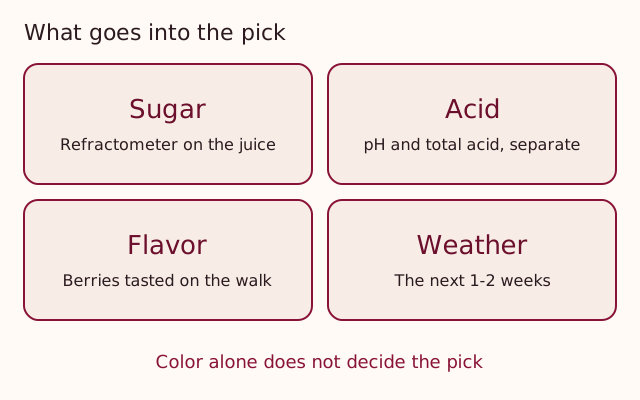
Takeaway: A strong reading with rain coming, or with nowhere to put the fruit, is a different decision from the same reading on a clear day with an empty tank.
Is a machine harvest different from hand picking?
Use cost, the wine style, and the weather to choose, and do not look here for a harvester specification.
Whicher Ridge calls machine harvest the quicker option. Fruit goes from the vine to crushed and pumped into a chilled tank in a short time, and a machine can run at night when the air is cooler. They also look at a machine when rain is on the way, because heavy rain can spoil ripe grapes and speed matters. Hand picking takes longer, and labor cost is higher. They call hand picking often essential for sparkling wine or a delicate Riesling. The choice they name is how much the picking will cost, what style is being made, and what the weather will do over the next one to two weeks.
That article names no harvester model, no ground speed, and no power figure. This page does not add one. If you need a rate, take it from the manufacturer of the machine you are actually hiring, and write the method you can run on the harvest row.
Takeaway: The record needs the method you can finish before the weather changes. It does not need a catalog of harvesters.
What happens after the grapes are picked?
Stop waiting for the fruit to get riper. The sheet you just filled is the fruit you will crush.
Illinois Extension and Whicher Ridge agree on the limit: grapes do not ripen further once they are cut from the vine. Sugar measured in the vineyard is the sugar that goes into the must. The order of work from sound fruit through fermentation, clearing, and bottling, including how a home batch uses a sugar reading after the fruit is in, is on home winemaking for beginners. What the yeast does with that sugar, and how to tell that fermentation has finished, is in how wine fermentation works. Bottling comes after the wine is stable; the fill, cork, and rest sequence is in how to bottle wine. None of those pages chooses the pick date.
Takeaway: The harvest row is the last vineyard measurement. Another week on the vine is a new row, not a correction of fruit you have already cut.
How this page was put together
Three sources, read on 11 October 2026:
- Whicher Ridge, “When to Pick Grapes for Making Wine,” Cathy Howard, 9 February 2020. The page was fetched live that day. Sampling positions, sugar and acid on the mixed juice, weekly repeats, the one-to-two-week forecast, cool-hour picking, and machine versus hand picking are that Western Australian winery’s account.
- University of Illinois Extension, “Harvesting Grapes,” Rhonda Ferree, 30 August 2018. Home Concord and Niagara grapes in central Illinois: color, bloom, seeds, firmness, taste, leaf light, and no further ripening after cutting.
- University of Minnesota Extension, cold-climate grapes, from the copy retrieved on 11 October 2026. The live page returned 403 on that date, so the Minnesota season, the refractometer, pH meter, and titrator, the wine-versus-fresh split, and the two insect names come from that retrieved text.
Search pages from other publishers were read only to see what they already explain. They are not used as facts here. The figures are schematics of those descriptions. They are not photographs of Whicher Ridge, of a university vineyard, or of a harvest measured for this site.
Takeaway: Check any number you are about to trust against the source named in that row, on your own block, this week.