Bottling a still wine with unwanted fizz can leave you reopening the batch. To degas wine before bottling, first establish that fermentation is complete, then remove excess dissolved carbon dioxide using a method suited to the wine and equipment, protect it from air, and recheck before filling bottles.
Degassing removes dissolved gas; it does not establish that the wine is stable for bottling. This guide is for small batches intended as still wine. It supplies a cause-check table, a method choice and a blank treatment record; sparkling-wine production needs a different process.
Check what is producing the bubbles
Do not decide from an airlock or a foamy sample alone. AWRI identifies residual-sugar analysis as a way to assess alcoholic-fermentation completion and malic-acid testing as a way to follow malolactic fermentation. See AWRI’s laboratory scope guidance. If either status is unresolved, postpone the bottling decision and investigate it first.
Use this editorial checklist before choosing a treatment:
| Check | What to record | Next decision |
|---|---|---|
| Alcoholic fermentation | Fermentation record and residual glucose/fructose result where completion is uncertain | Resolve remaining fermentable sugar or an unexplained change before treating fizz as residual gas |
| Malolactic fermentation, if intended | Malic-acid result, method and date | Confirm completion separately; see the MLF completion tests |
| Wine temperature | Actual reading at sampling and treatment | Compare observations under recorded conditions; a cold sample and a warmer sample are different observations |
| Intended style | Still red, white or rosé; desired gas character | Define the endpoint before removing more gas |
| Sediment | Whether deposits remain and whether a transfer is already needed | Plan separation before agitation |
| Vessel and equipment | Material, condition, model and the manufacturer’s permitted use | Leave operating settings blank until suitability is confirmed |
AWRI explains that gas solubility changes with temperature and wine composition, and that acceptable dissolved CO₂ differs between wine styles. Removing every trace is therefore a poor universal target. Its gas-adjustment guidance also describes nitrogen sparging in wineries: commercial producers can adjust dissolved gas when needed.
Choose the least intervention that meets the need
The matrix below is our synthesis for planning, rather than a set of operating specifications. In Alison Crowe’s winemaker Q&A, bulk aging and ordinary transfers can release gas; she also describes submerged stirring tools, purpose-built vacuum systems and commercial nitrogen sparging. Her advice stresses protecting the wine from oxygen during treatment and transfers.
| Situation | Starting choice | What must be resolved |
|---|---|---|
| Stable wine, no urgent bottling date, no pronounced unwanted spritz | Continue managed bulk aging and reassess | Storage protection and a later sample check; time alone is not a documented endpoint |
| Wine needs a planned transfer off sediment and only a modest adjustment | Assess the wine after that necessary transfer | Protect from air; do not add repeated transfers merely to chase bubbles |
| Kit wine at its specified degassing stage | Follow the instructions supplied for that exact kit | Required fermentation reading, additions, vessel, temperature and clearing sequence |
| Finished wine still needs active agitation | Use an appropriate sanitized wine stirrer under a defined procedure | Control foam, keep the working end submerged and limit air exposure |
| Vacuum proposed | Use a purpose-built system only after checking all component instructions | Pump, vessel, stopper, tubing and any trap must be suitable for that use; pressure setting unknown until verified |
| Measured gas adjustment needed at cellar scale | Ask a cellar service about controlled treatment and testing | Agree the style target, equipment and final measurement |
| Equipment suitability or fermentation status unknown | Wait and obtain the missing instructions or analysis | No treatment setting or bottling approval can be filled from guesswork |
Vacuum is not permission to improvise a pressure setting for a household container. This page gives no vessel rating, vacuum level or gas-flow recipe. Keep the equipment manual with the batch plan, or choose the waiting/testing branch.
How to carry out a stirring treatment
For an applicable kit, follow its own sequence. Winexpert’s WM-RE-22, revised January 17, 2025, places the required specific-gravity check before racking away from sediment, the supplied stabilizer and stirring; clearing follows afterward. It specifies sanitized equipment and offers a spoon or drill attachment. Those are instructions for the covered kits, not a universal schedule for grape wine. Read the manufacturer’s manual.
For another finished still wine, use the following preparation sequence with a procedure appropriate to the batch:
- Confirm the starting condition. Identify the lot, fermentation evidence, temperature and sediment status in the record below.
- Prepare the contact equipment. Clean and sanitize the vessel and wine-contact tools according to their applicable instructions. If a transfer is needed, plan it before beginning.
- Separate sediment where required. Avoid turning a settled batch cloudy just before bottling. Decide beforehand how the wine will settle again if disturbed.
- Apply the chosen procedure in controlled stages. With an appropriate stirring tool, keep its working end below the surface. Begin briefly enough to observe the response; pause if foam approaches the opening. Do not keep increasing agitation to meet an arbitrary countdown.
- Protect, sample and record. Restore the appropriate protected storage arrangement, reassess the wine and resolve the remaining checks before bottling.
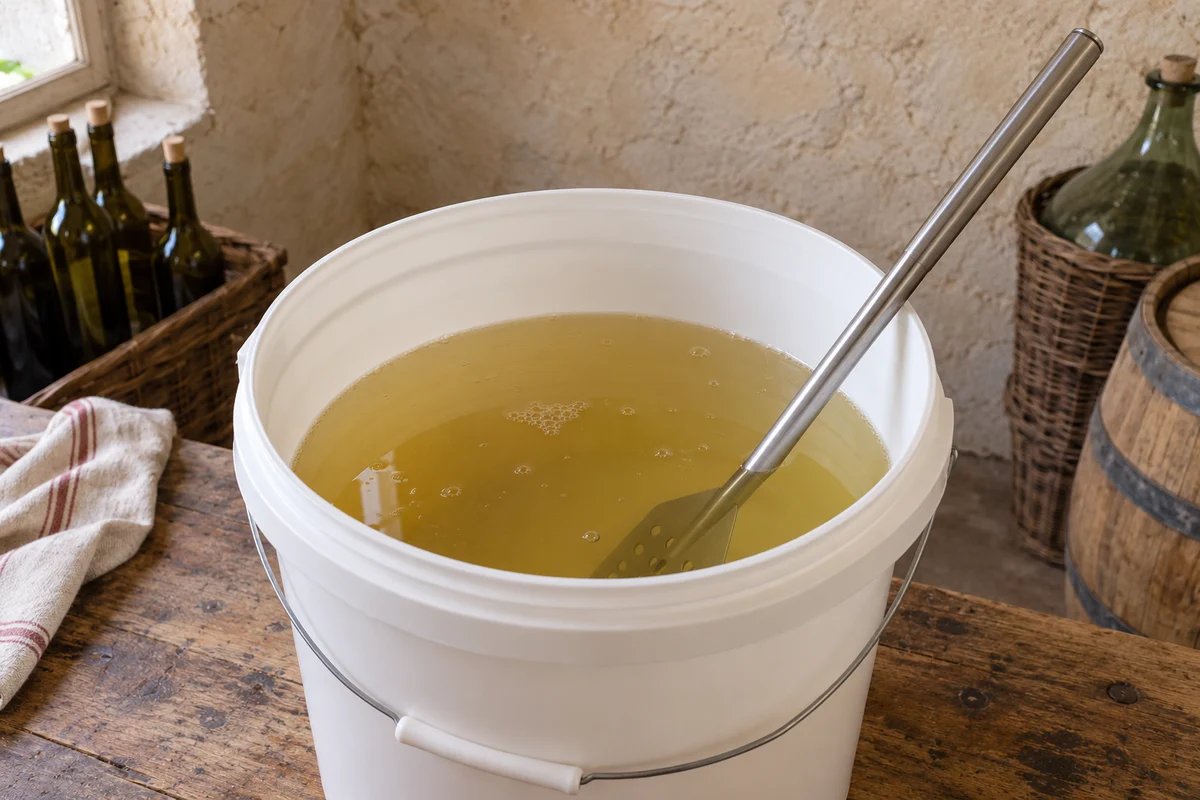
These planning steps do not prescribe a drill speed, total stirring time or temperature. Use the applicable kit or equipment procedure for those settings. If it does not cover your setup, get clarification before running it.
How do you know when to stop?
A small-sample screen and a dissolved-CO₂ measurement answer different questions. Winexpert’s manual uses a sensory spritz check and a half-filled test jar shaken with the opening covered by hand, judging the gas release. That is a qualitative kit check: it supplies neither a CO₂ concentration nor a microbial-stability result. Do not turn it into prolonged storage in a sealed, pressurized sample container.
Our recommendation is to record the sample identity, temperature, procedure and observation together. If you need a numerical endpoint, arrange dissolved-CO₂ testing and agree the target for the intended style. A quiet sample should not close an unresolved fermentation field.
Repeated aggressive treatment also has costs. AWRI warns that cellar movements can introduce oxygen and that sparging can remove desirable volatile aromas. Stop chasing a completely bubble-free appearance; reassess the defined endpoint and the wine’s protection instead. AWRI: gas adjustment.
Keep a final-batch record before bottling
Copy this table into the cellar notebook. Blank cells mean no value has been established for your wine.
| Field | Your entry |
|---|---|
| Lot, final blend and intended still-wine style | |
| Alcoholic-fermentation evidence and sample date | |
| MLF evidence or documented plan to prevent MLF | |
| Sample and bulk-wine temperatures | |
| Sediment status and transfer performed | |
| Treatment method and applicable manual/procedure | |
| Vessel and equipment suitability confirmed by | |
| Actual settings, elapsed treatment and interruptions | |
| Before/after observation or dissolved-CO₂ report | |
| Post-treatment clarity and free-SO₂ check | |
| Later blending, sweetening or additions | |
| Remaining stability questions and bottling decision |
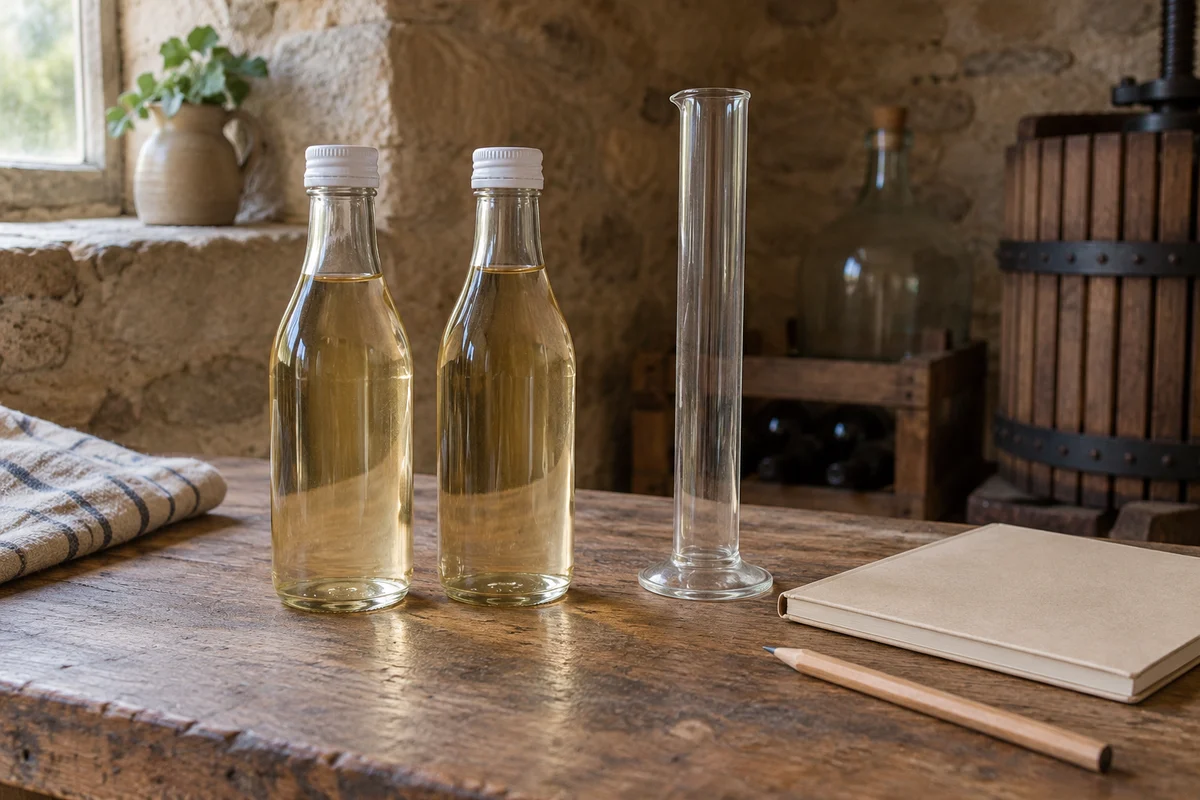
Keep the final row open until the other relevant bottling checks are resolved. AWRI lists dissolved gases alongside free SO₂, glucose plus fructose, sterility, heat stability and cold stability, with targets dependent on the wine and packaging circumstances. A gas observation cannot replace that broader assessment. AWRI: pre-bottling adjustments and specifications.
If the blend changes, identify the changed wine and reassess the relevant checks. For the next stage, use the still-wine bottling guide. If crystals are the unresolved issue, the home cold-stabilization guide treats that separate problem.
This guide compiles the public sources above, read October 16, 2026. The tables are editorial planning aids; no treatment trials or laboratory measurements were performed for this article.