Cold treatment can fail to prevent bottle deposits if it does not cover the conditions the wine later encounters. To cold stabilize wine at home, use controlled chilling to encourage tartrate deposition, separate the wine from the deposit while it is still cold, and check the finished blend with a suitable cold-stability test.
A refrigerator hold is a treatment attempt; it becomes a documented result only when you record the conditions and the test. If your setup cannot maintain and measure the required conditions, use it for observations and arrange laboratory testing before claiming a pass. This guide helps you make that equipment decision and keep a treatment record for finished still grape wine.
Can your home setup do the job?
Begin with what you can measure and handle. The appliance name alone does not establish its capability. Our practical recommendation is to complete the following checks before committing a batch to a cold hold.
| What you have | What to establish first | Decision |
|---|---|---|
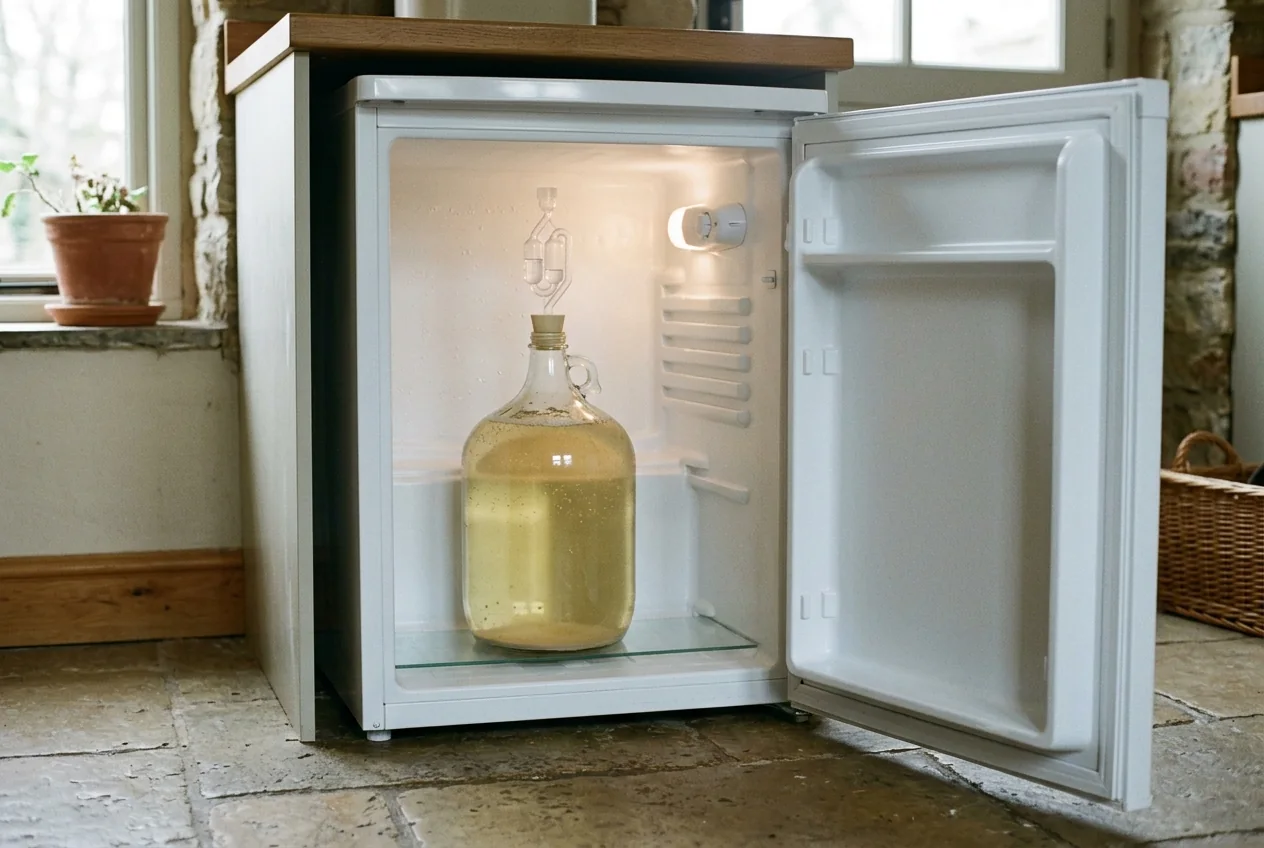
| Domestic refrigerator | Actual temperature during a loaded hold; room for the vessel, closure and transfer equipment | Record a trial under those measured conditions. Do not infer a colder treatment from the dial setting |
| Controlled cooling chamber | Temperature control with the wine present, plus a way to separate the deposit without letting the wine warm | A candidate for a planned treatment; the final sample still needs testing |
| Domestic freezer | Whether the proposed use is a sample screen or a controlled bulk treatment | Do not use a freeze/thaw observation as final cold-stability approval |
| Seasonally cold room or garage | The temperature variation over the entire proposed hold | If conditions are unmeasured, record an observation rather than a verified treatment |
| No means of keeping wine cold during separation | How the wine would be moved off the settled material | Resolve this before treatment, or use a cellar service that can complete the process |
For the record, distinguish measured wine temperature from chamber temperature. If only the chamber was measured, say so. Ask the testing laboratory or cellar adviser to define the treatment appropriate to your wine; a temperature copied from a different lot does not answer that question.
Treat the wine, separate it cold, then test it
Cold treatment targets potassium bitartrate, also called KHT. The Australian Wine Research Institute explains that KHT becomes less soluble as wine cools. An unstable wine can therefore deposit crystals before bottling instead of afterward. AWRI: measurement of cold stability.
Use the following as a work sequence, with the temperature and duration filled from the plan for your lot:
- Identify the starting wine. Record the lot, blend and additions already made. Arrange a starting test and a post-treatment test so the result can be compared. Denise Gardner’s December 2019 technical guide recommends testing both before and after treatment. Reviewing Cold Stability in Wine.
- Hold under the planned conditions. Record the actual temperature observations and elapsed time, including interruptions. Treat an unrecorded interval as an unknown, rather than filling it from the appliance setting.
- Separate the deposited material while the wine remains cold. Plan the racking or filtration before the hold begins. Gardner also stresses managing oxygen during the cold rack.
- Identify the wine after separation. Take the sample for the agreed test from that wine. If you later change the blend, open a new record for the changed wine.
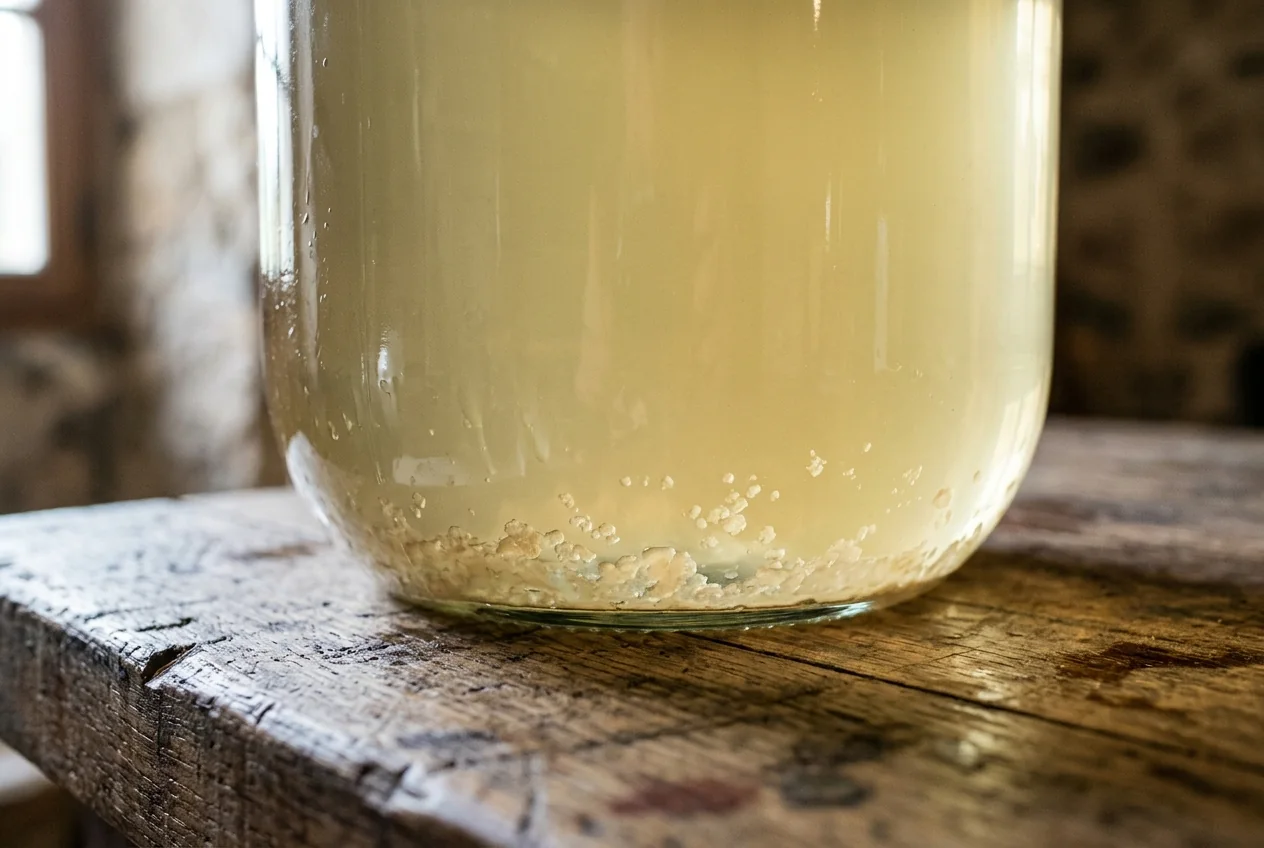
The cold separation is essential. Wine Australia’s technical advice says warming before racking or filtration allows some KHT to dissolve again; the resulting stability then relates to the separation temperature. It also calls for rechecking after additions, acid adjustment or blending, ideally on the final blend just before bottling. Wine Australia: Top tips for wine stabilisation, 9 June 2017.
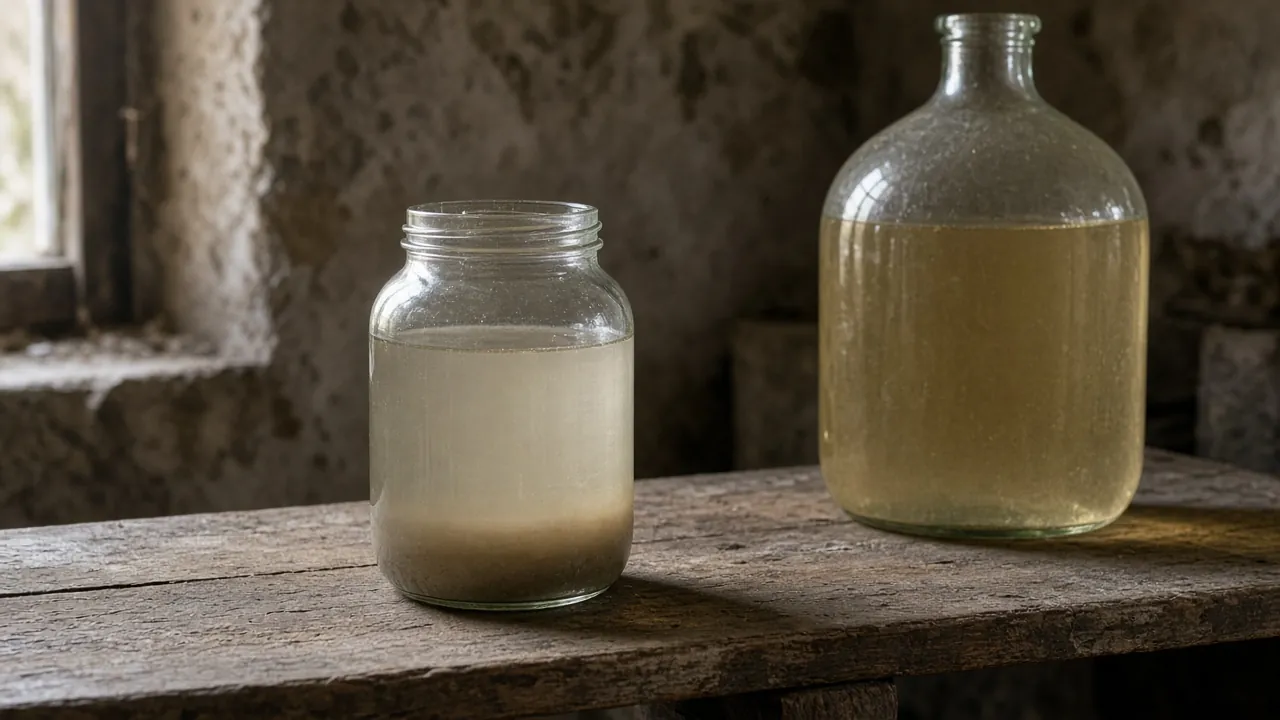
A photograph of sediment cannot identify its chemistry or supply that test result. Write what you observed, and keep the laboratory interpretation in its own field.
How long should you cold stabilize wine?
There is no batch-independent countdown in this guide. AWRI describes unseeded cellar chilling as taking several weeks; its contact-seeding process can shorten precipitation to hours or a few days. Those are different processes, rather than interchangeable waiting periods. This page supplies no seeding dose or home-equipment setpoint. AWRI: cellar methods.
Do not confuse the time for a test sample with the time for bulk treatment. AWRI’s refrigeration/brine test holds a filtered sample at −4°C for three days. It requires controlled cold conditions and membrane filtration; interpretation considers whether a crystalline deposit persists after warming. These are laboratory test conditions, not instructions to put an entire home batch at that temperature for that duration.
AWRI also describes freeze/thaw screening but explicitly advises against using it as the final cold-stability test. A home freezer screen therefore cannot close the final-result field. AWRI: refrigeration/brine and freeze/thaw methods.
Warming a test sample for interpretation and warming the bulk wine before separation are different operations. Keep the test instructions with the sample record and the cold-transfer instructions with the treatment record.
Keep a treatment record that survives a blend change
Copy this table into your cellar notebook. The empty cells are deliberate: no temperature, treatment duration or test outcome has been supplied for your wine.
| Field | Your entry | What belongs here |
|---|---|---|
| Lot and final blend | Batch identity and date; identify any later blend separately | |
| Starting sample | Sample identity, date, method and reported result | |
| Cooling setup | Vessel, appliance, temperature instrument and measurement location | |
| Planned cold hold | Temperature and duration specified for this lot, with their source | |
| Observed cold hold | Actual readings, elapsed hold and interruptions | |
| Cold separation | Racking or filtration method, date and observed wine temperature | |
| Post-treatment sample | Sample identity after separation and laboratory submission date | |
| Subsequent changes | Blending, acid adjustment or other additions, with dates | |
| Final-blend test | Method, conditions, date, report reference and result | |
| Unresolved questions | Missing measurements or laboratory follow-up |
Our suggested filing rule is simple: tie every result to the sample identity on the report. If the report describes wine collected before sweetening or blending, put the changed wine in a new row and arrange the recheck. Ask the laboratory how to collect and ship a representative sample, which method it will use, and what the reported result means. Do not invent a sample volume or shipping temperature to complete the notebook.
Even an unchanged wine can evolve. AWRI distinguishes current stability from the potential to become unstable as natural crystallisation inhibitors change with aging. A dated pass belongs to that sample and method; it is not a promise that every future storage condition will leave the bottle clear. AWRI: current and potential stability.
What does a cold-stability result leave unresolved?
A KHT result addresses one part of bottling preparation. AWRI’s pre-bottling guidance lists heat stability, cold stability, sterility and glucose plus fructose as separate analyses. A cold result does not fill the other fields. Its targets are general guidance that varies with the wine and packaging circumstances, not a universal home-bottling specification. AWRI: pre-bottling adjustments and specifications.
| Remaining question | Next check |
|---|---|
| Will protein haze develop? | Use the separate bentonite timing and protein-test record |
| Has fermentation finished, and what does the sugar result show? | Follow the fermentation completion checks |
| Are the other bottling preparations complete? | Return to the bottling readiness guide |
| Could the deposit be calcium tartrate? | Ask for an appropriate assessment; ordinary cold treatment mainly addresses KHT |
Red wine is not exempt from tartrate instability: AWRI notes that changes in anthocyanins over time can increase susceptibility. Its packaging guidance also explains that calcium tartrate responds less strongly to low temperature than KHT. Neither wine colour nor the disappearance of one deposit proves every kind of stability. AWRI: cold stabilisation.
Method and sources
This is a public-source workflow for home equipment decisions, compiled on 15 October 2026. The four AWRI and Wine Australia pages were fetched and read that day. Gardner’s December 2019 guide was read from the research copy fetched on 11 October 2026. No household refrigerator, wine lot or stability treatment was tested for this article.
The capability table and blank record are editorial tools built around those sources. They supply no universal treatment temperature, additive dose, or promised crystal-free storage period. Use the record to distinguish what happened to your wine from what remains to be measured, then carry the final-blend report into the separate bottling checks.