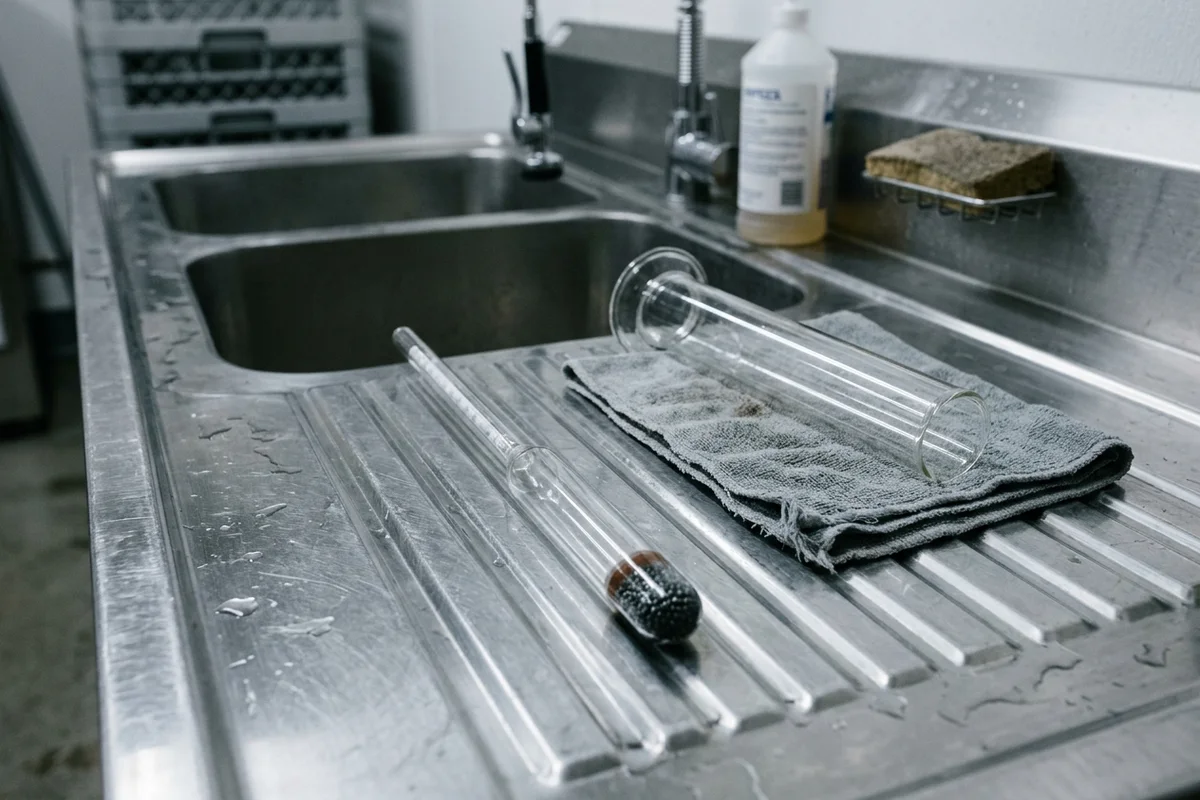
Wine Alcohol With Missing Starting Gravity: What Can Still Be Measured
Missed your wine's starting gravity? Separate what a final hydrometer, vinometer, ebulliometer or laboratory test can measure, and record your batch inputs.
How wine is made on a small scale: vineyard, harvest, fermentation and cellar work.
Missed your wine's starting gravity? Separate what a final hydrometer, vinometer, ebulliometer or laboratory test can measure, and record your batch inputs.
Check fermentation, temperature and sediment before degassing still wine. Compare stirring, waiting and specialist methods, then record the final bottling checks.
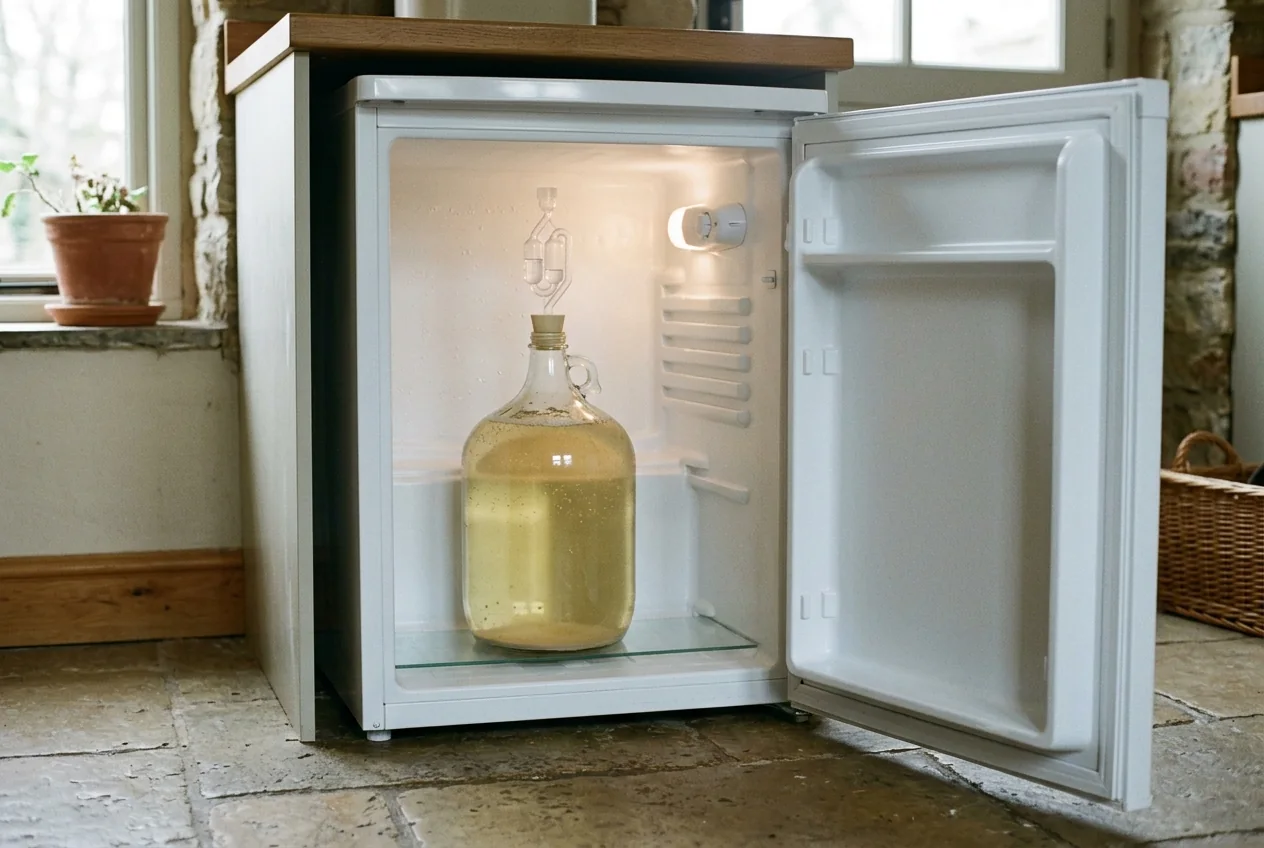
Match home refrigeration to cold treatment, keep the wine cold through separation, and record the final-blend test before calling it tartrate stable.
A kit sheet, a juice addition, and a final-blend fining are three different bentonite jobs. Record the product, the rehydration, the heat test, and the result.
When bubbles stop, a malic-acid test separates a stalled malolactic fermentation from a finished one. Record the method, unit, detection limit, and what the result leaves out.
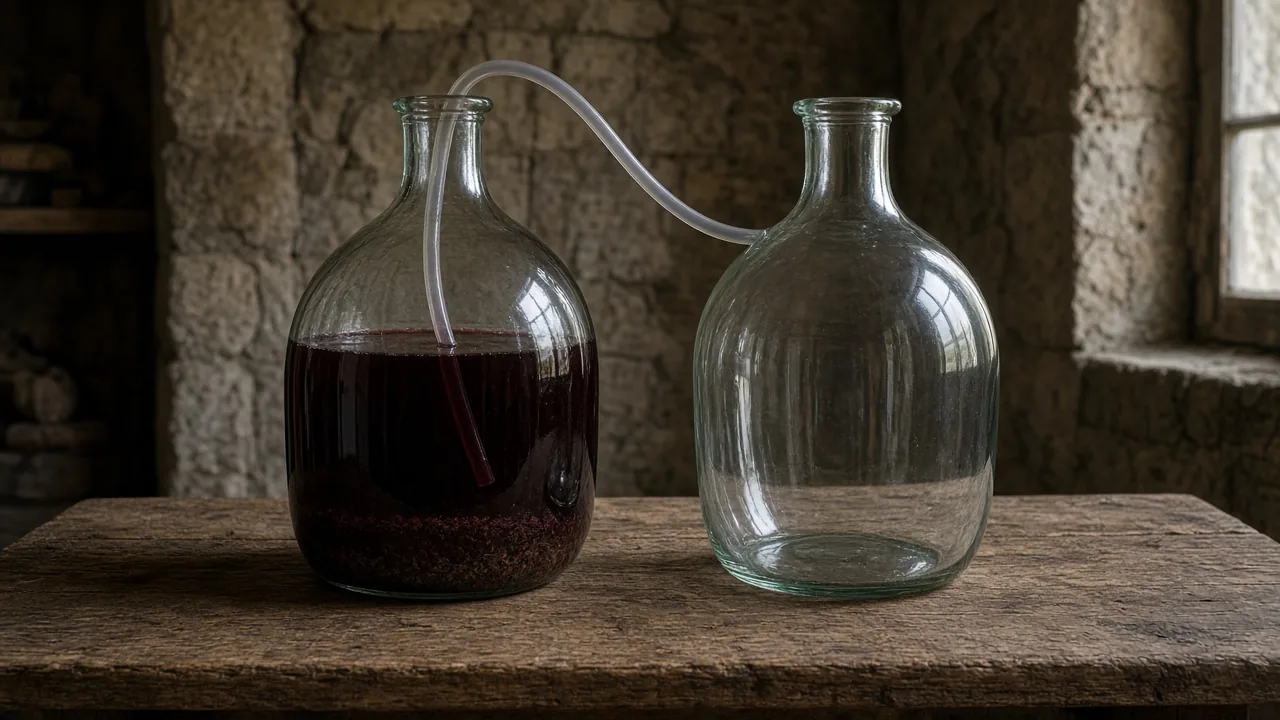
Decide the first rack when primary fermentation is ending and sediment has settled. Separate gross and fine lees, malolactic plans, and air exposure.
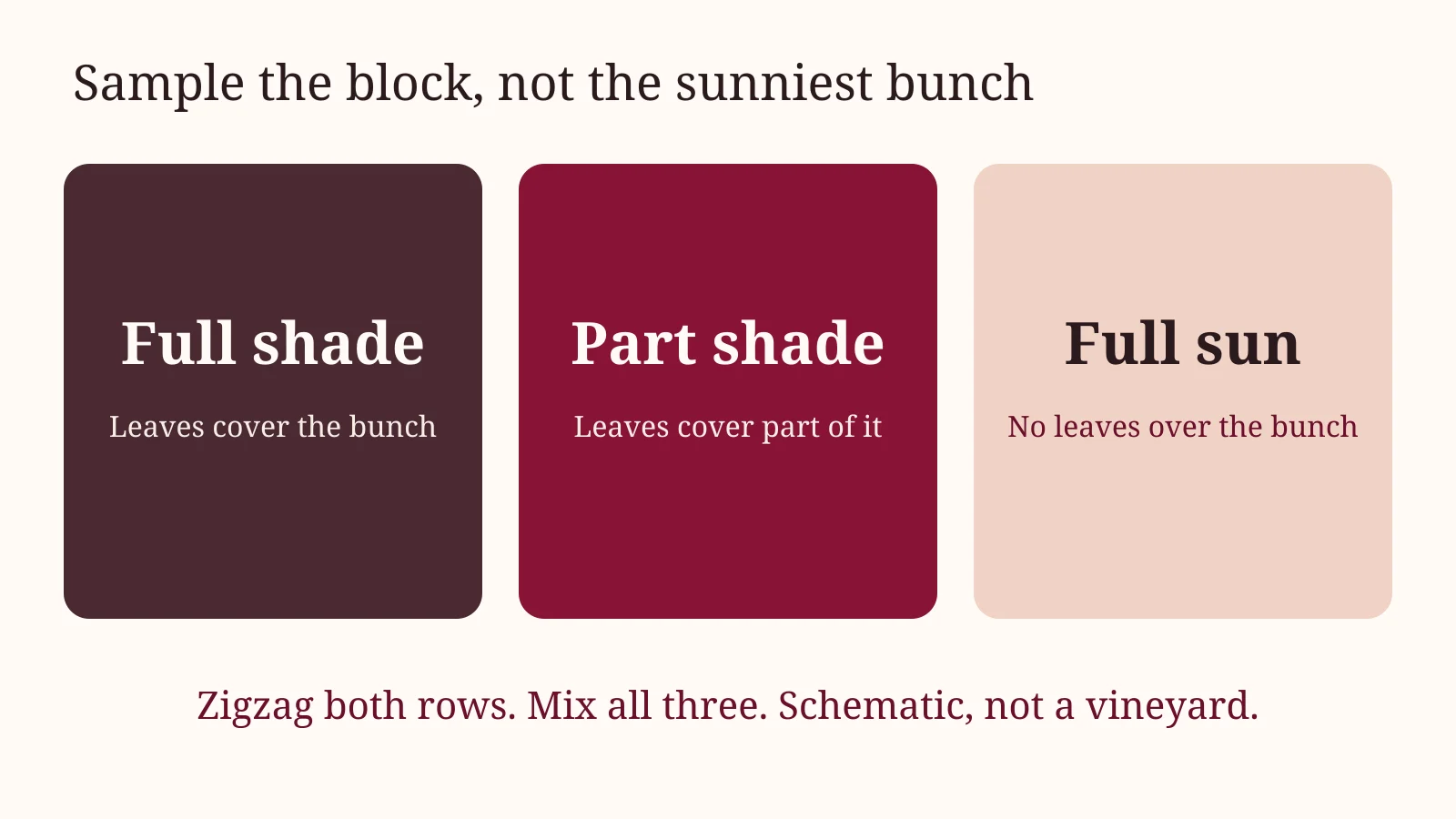
Sample each block in shade and sun, then record sugar, acid, fruit condition, weather, and whether the cellar can take the fruit. No universal pick date.
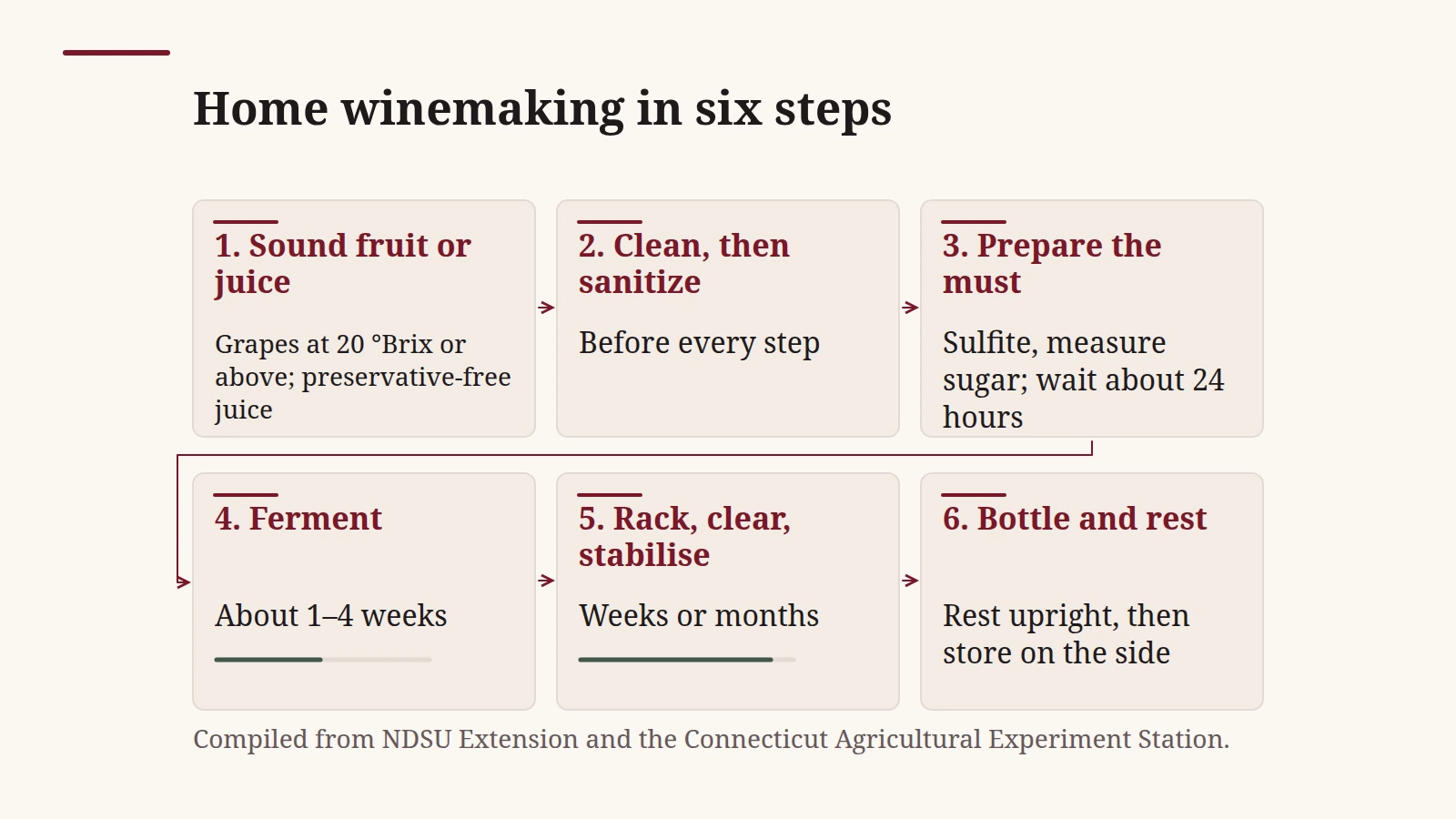
A beginner's route through home winemaking in the US: six steps from fruit to bottle, the equipment and sanitation checklist, the readings to take and what federal law allows.
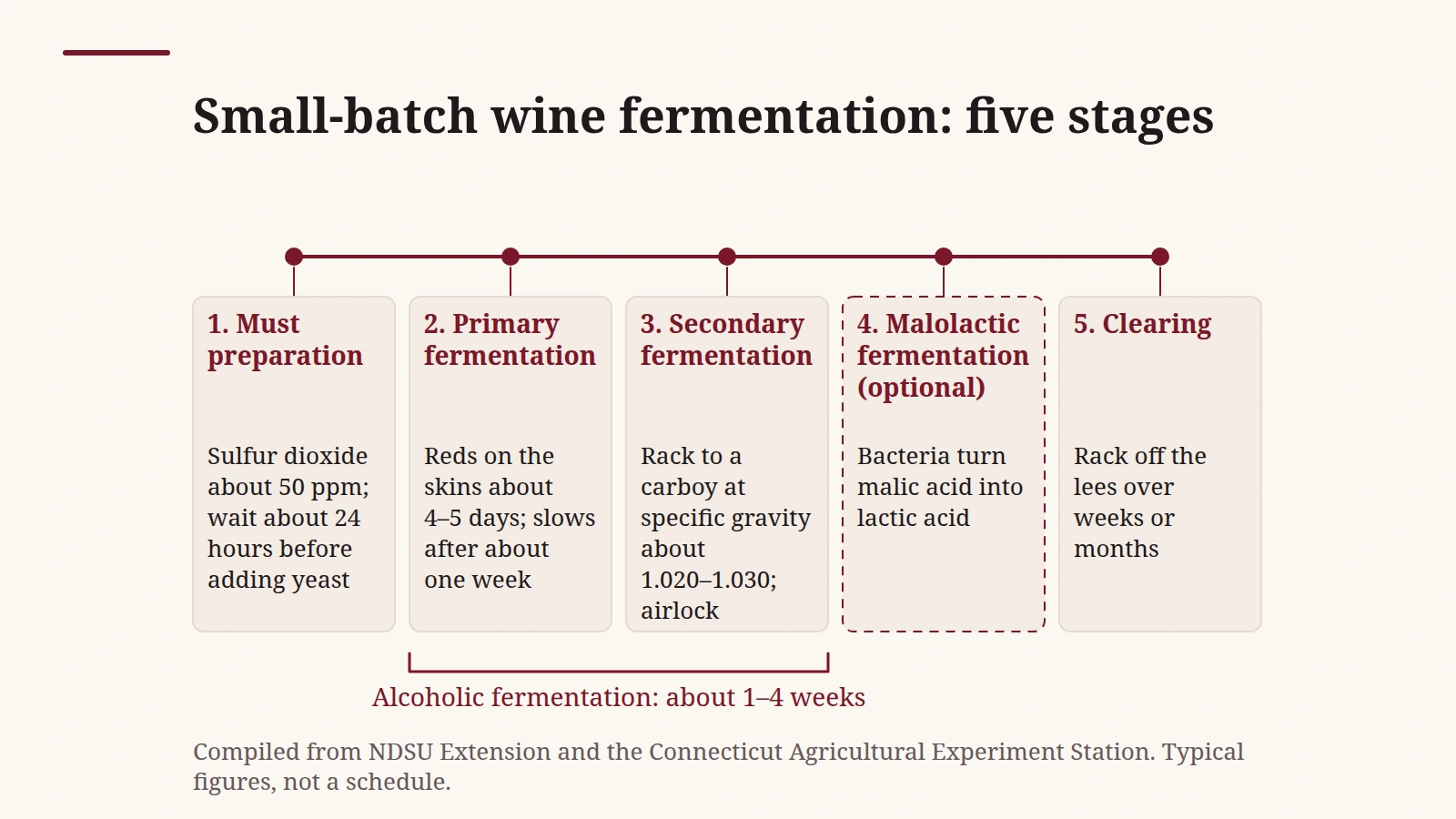
How wine fermentation works in small batches: the two fermentations, a stage-by-stage timeline, temperature ranges by source, yeast choices and four checks that show it has finished.