Evaluating cork vs screwcap oxygen ingress in bottled wine requires separating early post-bottling oxygen pickup from long-term closure permeation, because high OTR can lead to oxidised characters while very low OTR values can lead to the development of reductive attributes if appropriate precursors are present. Headspace oxygen and oxygen encapsulated in the closure are the main sources of oxygen for bottled wines in the period immediately following packaging (2-4 months), indirectly resulting in free sulfur dioxide loss before permeation of oxygen through the closure governs subsequent aging. Globally, cork-based closures (natural and agglomerated) share ~70% of the wine market while screw cap and synthetic closures split the remaining 30%, whereas in Australia screw caps dominate the market, sealing ~90% of all bottled wine.
When a cylindrical cork is inserted into a bottle, reducing its diameter by about 25% to fit the bottleneck internal bore traps cellular air containing circa 4 mg of oxygen for a 44 mm × 24 mm cork released as OIR.
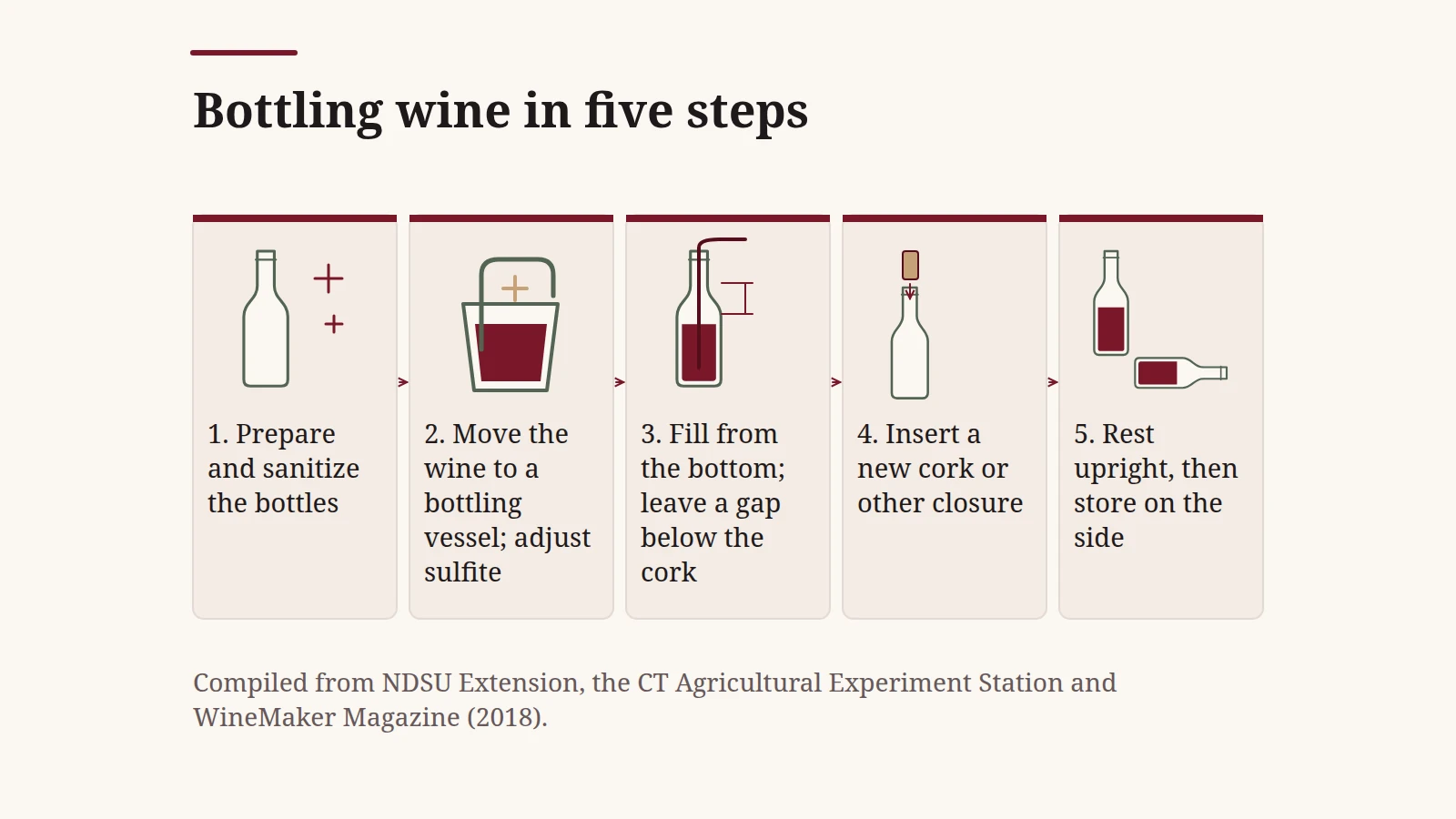
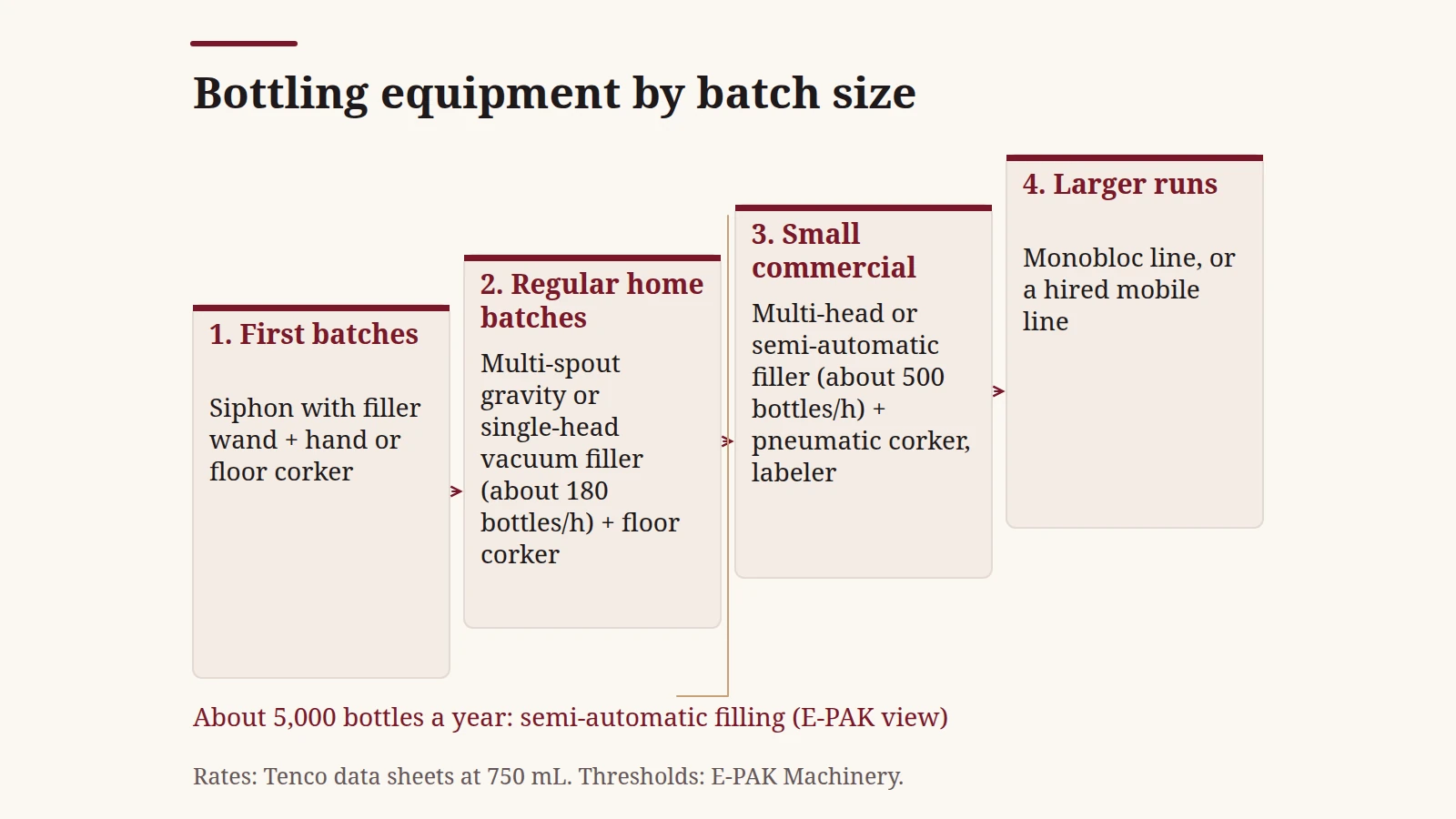
While our companion guide on cork sizing, headspace and jaw compression examines corker iris mechanics and our step-by-step wine bottling guide covers cellar preparation, this technical comparison analyses closure oxygen transfer pathways, liner permeability tiers, total package oxygen, and sulfur dioxide depletion across our winemaking and bottling guides.
| Closure Type or Parameter | Oxygen Ingress / Structural Specification | Dominant Failure Mode or Variability Profile |
|---|---|---|
| Screw cap with Saran Tin liner | Typically 0.00005-0.0005 cc O2/day OTR | Lower oxygen transmission rate than the Saranex liner |
| Screw cap with Saranex liner | Around 0.0001-0.001 cc O2/day OTR | An order of magnitude higher OTR than Saran Tin liners |
| Technical cork vs synthetic closure | Technical corks had low OTR measurements below 0.8 ml over 36 months | The synthetic closure had the highest OTR and measured 2.6ml at 10 months |
| Natural cork (44mm stopper) | Contains an estimated at 3.5ml of oxygen compressed to between 6 and 9 atmospheres | Drives oxygen pickup over the first 6-9 months of aging from 40 million cells in one cubic centimeter |
| Natural cork (months 12 through 36) | Standard deviation between 21% and 28% of the average OTR | Over a three year period total ingress remains in a range that is roughly 1.5 to 3.3 ml with bottling pickup calculated at .25ml |
| Commercial closure variability tiers | Screw caps have very low to low OTR; technical/agglomerated corks have lower variability | Natural corks show high levels of variability; synthetic closures have moderate to high OTR |
How Do Cork and Screw Cap Sealing Geometries Control Oxygen Pathways?
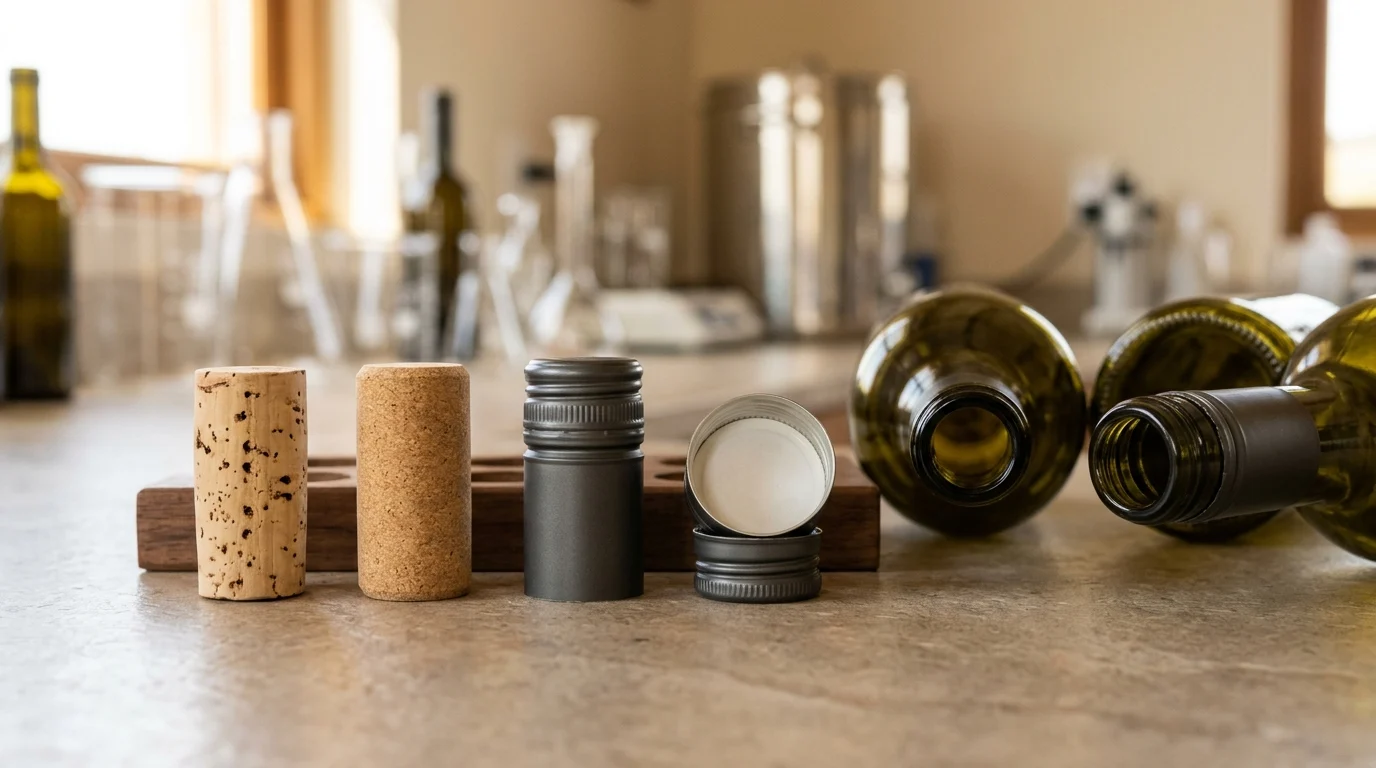
Cylindrical cork stoppers and roll-on pilfer-proof screw caps seal against distinct zones of the glass bottle finish:
- Cylindrical cork dimensions and coating: For a cylindrical closure, the seal is made along the length of the closure, which is 44 or 49 mm in length (±1 mm) and around 24 mm in diameter (±0.5 mm), with 16-18 mg surface coating on a 44 x 24 mm cork, 6±2% moisture, and <2 mg dust/stopper.
- Internal bottle neck bore specification: Under EN 12726 (formerly NFH 35-100 or GME 50.01), the bottle neck internal bore d1 is 18.5 +/- 0.5 mm measured at 3 mm below the top of the finish with max. ovality 0.5 mm, and d2 is 20 +/- 1 mm measured at 45 mm with max. ovality 1 mm.
- External screw cap casing and liner disc: A screw cap uses a metal (aluminium) casing around the external bottle neck that does not make contact with the internal surface of the bottle neck, forming its seal by way of a disc that is compressed against the glass.
- BVS finish redraw elongation: For standard Bague Verre Stelvin (BVS) finish screw cap bottles, redraw forms the seal between bottle and liner on both the top and the side, producing an elongation of the closure of approximately 0.5 mm in CE.T.I.E Bottling Guide No. 6 2016.
Saran Tin vs Saranex liner construction and OTR
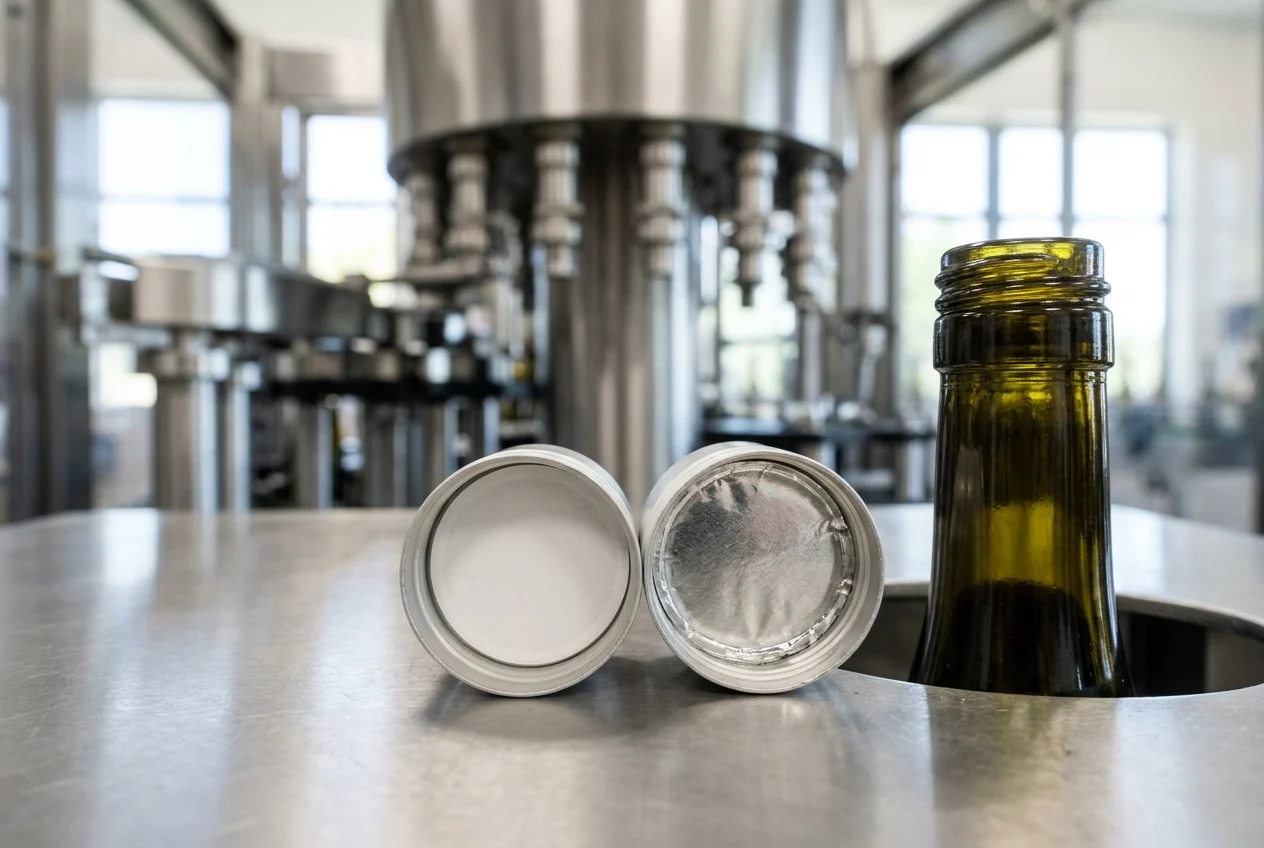
Each screw cap liner consists of three or four main layers, including polyvinylidene chloride (PVDC) referred to as Saran and an expandable polyethylene layer that allows compression against the bottle glass. Selecting between the two liner constructions sets the steady-state oxygen barrier:
- Saran Tin vs Saranex OTR: The oxygen transmission rate (OTR) of Saran Tin liners is typically 0.00005-0.0005 cc O2/day, with the Saranex liner an order of magnitude higher at around 0.0001-0.001 cc O2/day.
- European vs Australian liner preference: European producers using screw caps tend towards Saranex due to the perception that wines sealed with Saran Tin can develop reductive characters due to the very low levels of oxygen ingress.
- Capping head removal torque specifications: For a screwcap of 30 mm diameter, Stelzer 2005 specifications list removal torque ranges of 1.40 – 2.80 Nm for Auscap, 0.68 – 2.83 Nm for GlobalCap, and 0.90 – 1.81 Nm for Péchiney. For capping machine setup across small-scale lines, see our wine bottling equipment guide.
- Historical development and adoption: Stelcap-vin was trademarked in 1959 by a French manufacturing company, La Bouchage Mecanique (LBM), licensed in 1970 by Australian Consolidated Industries (ACI), and shortened to Stelvin in 1978. Data from the International Wine Challenge from 2016 showed that 89.3% of Australian wines submitted were sealed with screw cap closures (n=1,322), compared with 26.3% sealed under screw cap across all entries.
How Much Oxygen Do Natural and Technical Corks Release After Bottling?
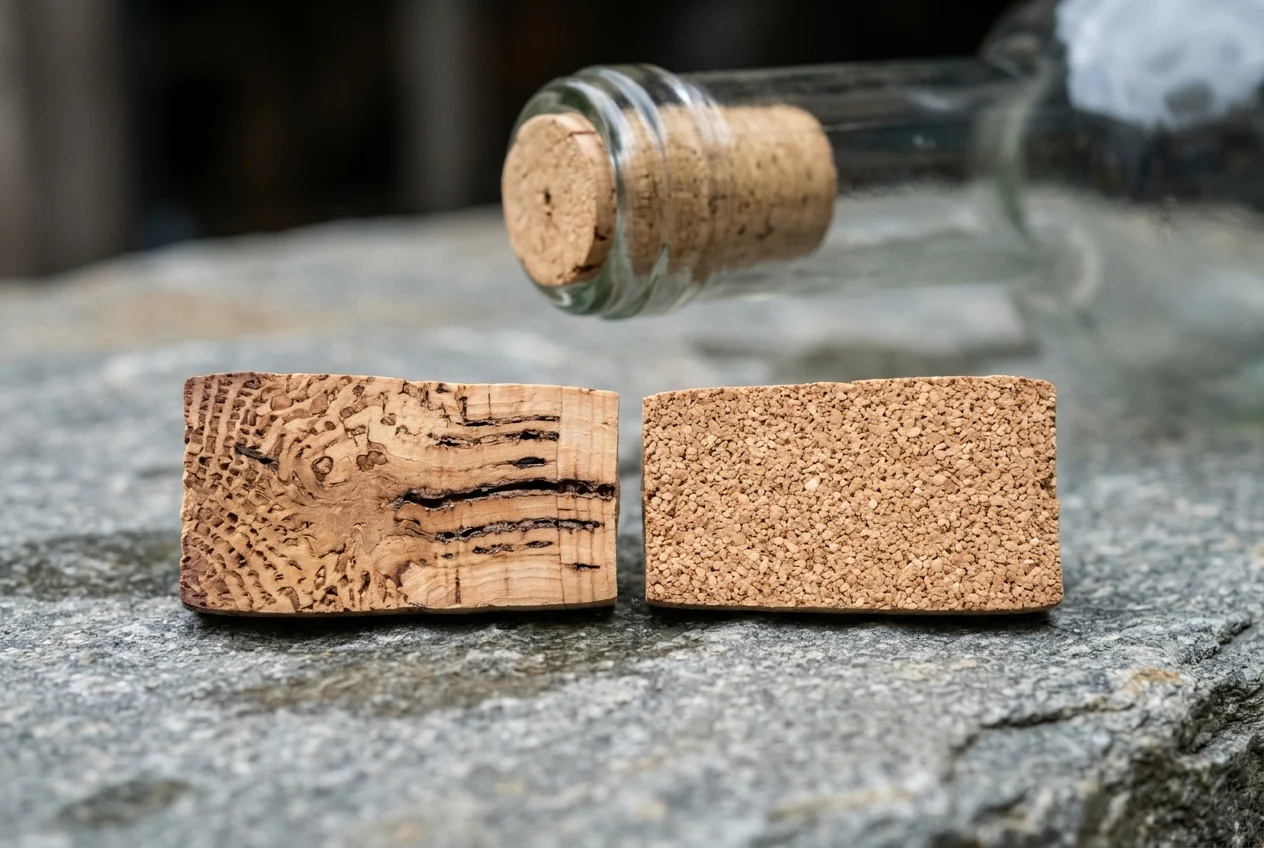
Natural corks are punched from the outer bark of cork oak (Quercus suber), whereas manufacturers produce technical cork closures after granulation and adding 60%–85% by weight of granules with a food-grade polyurethane binder. Natural cork densities were 179 ± 21.6 (124–236) and 173 ± 22.6 (140–283), whereas microagglomerated technical cork densities ranged from 264 ± 7.7 (251–279) up to 317 ± 6.7 (301–330).
Cellular compression and initial oxygen release
In natural cork tissue, 40 million cells fit in one cubic centimeter, and a 44mm cork contains an estimated at 3.5ml of oxygen whose internal pressure increases to between 6 and 9 atmospheres during compression, driving oxygen pickup over the first 6-9 months of aging. Expressed by mass, reducing its diameter by about 25% to fit the bottleneck internal bore means the cellular air entrapped in the matrix contains circa 4 mg of oxygen for a 44 mm × 24 mm cork, released as OIR.
Consequently, cork oxygen transfer is front-loaded into the initial months after bottling:
- First and second month IOR share: Initial oxygen release accounts for 60% to 70% of the total oxygen ingress in a bottle after the first month and around 90% to 97% after the second, and purging 49 mm length and 24 mm diameter corks with nitrogen for 3 months reduced oxygen release at 64 days by 1.4 mg.
- Wet-condition kinetics: At 23 °C and wet conditions, oxygen ingress values reached around 60% of the total after the first month—measured in the first month as 0.9 hPa for the natural cork and 1.4 hPa for the technical cork—and around 90% after the second.
- Cumulative oxygen ingress by natural cork grade: With 0.25 at bottling, Natural Cork Flor averaged 1.55 at 12 Mos, 1.94 at 24 Mos, and 1.97 at 36 Mos, while Natural Cork First averaged 2.14 at 12 Mos, 2.51 at 24 Mos, and 2.52 at 36 Mos.
- Permeability dispersion and nanoscale channels: Natural cork stoppers show permeability coefficients varying over three and four orders of magnitude, ranging from 5 × 10^-16 to 2 × 10^-14 kg m^-1 s^-1 Pa^-1 reported for 48 mm cork samples. Gas transfer through natural cork occurs through plasmodesmata, the channels with approximately 100 nm of diameter that cross the cell wall.
Wet vs dry bottle orientation and storage temperature
Bottle orientation and cellar temperature govern long-term cork barrier performance. Upright storage for 24 hours post-bottling is standard practice, after which leaving bottles upright can allow the corks to dry out, making them much more susceptible to oxygen permeation. Liquid contact reduces Po by 5 and 4 times, respectively, for natural and technical corks. In comparative measurements, long-term oxygen partial pressure dropped from 7.0 ± 0.6 to 1.6 ± 0.9 for natural cork and from 9.5 ± 0.4 to 2.1 ± 0.2 for technical cork.
Tested at 8, 23, and 40 °C, for microagglomerated corks Po increased and τ decreased with temperature, with activation energies of 15.3 and 35.2 kJ mol^-1, respectively.
Laboratory OTR measurement methods
Comparing closure test certificates requires checking the analytical method. Destructive OTR methods include Free SO2 titration, Coulometric detection, Colorimetric detection, O2 titration, and the Manometric method. Of these methods, the Mocon Ox-tran method (an applied coulometric detection method) and the chemiluminescence methods are the most widely used; non-destructive methods include chemiluminescence.
Why Does Total Package Oxygen Outweigh Closure OTR in Early Shelf Life?
Headspace oxygen and oxygen encapsulated in the closure are the main sources of oxygen for bottled wines in the period immediately following packaging (2-4 months), before permeation of oxygen through the closure drives further exposure.
Ullage geometry and the screw-cap skirt cavity
Headspace geometry differs substantially between cork-mouth and screw-cap bottles:
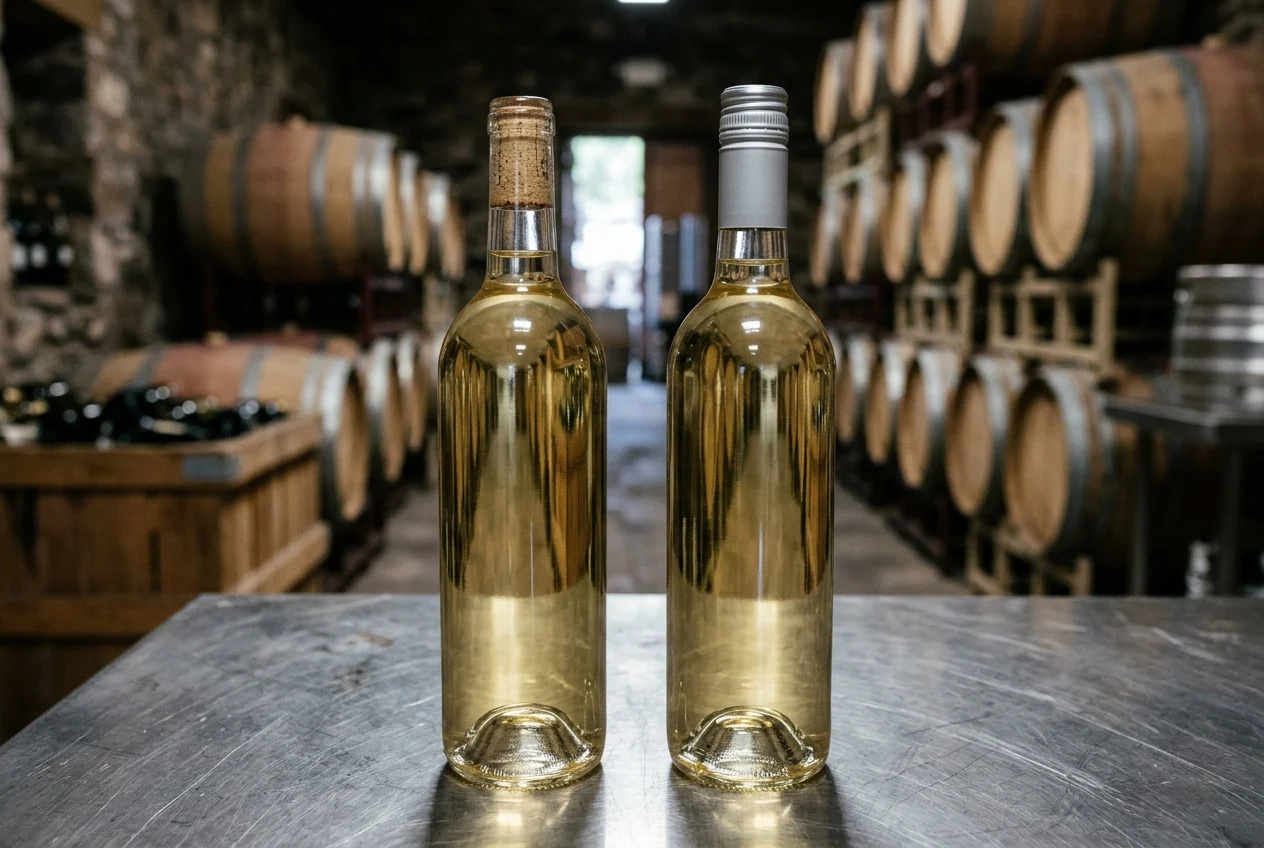
- Cork mouth vs BVS screwcap ullage: For standard CE.T.I.E cork mouth bottles, the ullage space should be greater than 12 mm at 20°C (at least 13 mm at 20°C for nominal 750 mL bottles), whereas for Bague Verre Stelvin (BVS) bottles the ullage space should be greater than 30 mm.
- Thermal expansion allowance: For standard Bague Verre Stelvin (BVS) finish screwcap bottles, the ullage space should be greater than 30 mm to allow enough volume for expansion of the wine during storage at 20–25°C.
- Screw-cap skirt gas volume: The total volume of a standard screw-cap, including the skirt, is approximately 40 mL, compared with the internal headspace volume of approximately 10 mL when a standard fill height of 32 mm is applied.
- Dissolved and headspace oxygen control: Nitrogen, argon or carbon dioxide (in the form of dry ice) are used to reduce or keep the DO below 0.5 mg/L as per recommendations in Australian Grape & Wine’s Packaging Guidelines. Typically, more than 60% of the oxygen in the bottle is present in the headspace, modern bottling lines achieve displacement of ~60 – 80%, and cylindrical closures applied without a vacuum can result in an additional 1 mg/L HSO pickup. Most modern bottling lines are able to achieve displacement of approximately 60-80% of the oxygen from the headspace, resulting in reasonably low HO values of around 0.8-1.5 mg/L.
AWRI Total Package Oxygen benchmarks and shelf-life impact
AWRI TPO specifications for different levels of oxygen management define four operational tiers:
- Best practice and acceptable TPO: AWRI TPO specifications classify <1.5 mg/L as Best practice and 1.5-2.5 mg/L as Acceptable.
- Requires improvement and poor practice TPO: AWRI TPO specifications classify >3 mg/L as Requires improvement and >4 mg/L as Poor practice.
| TPO Management Tier | Initial TPO vs Closure OTR | Total Exposure & Projected Shelf-Life |
|---|---|---|
| LOW (<1.0 mg/L) | 0.2 TPO + 2.2 closure OTR | 2.4 total (8% from TPO), projected shelf-life (months) 27 |
| MEDIUM (1.0 – 3.0 mg/L) | 1.9 TPO + 2.1 closure OTR | 4.1 total (47% from TPO), projected shelf-life (months) 8 |
| HIGH (> 3.0 mg/L) | 4.7 TPO + 2.0 closure OTR | 6.7 total (70% from TPO), projected shelf-life (months) 6 |
In AWRI case studies, when packaging oxygen reaches the HIGH (> 3.0 mg/L) tier at 4.7 TPO + 2.0 closure OTR = 6.7 total (70% from TPO), projected shelf-life drops to 6 months compared with 27 months under LOW (<1.0 mg/L) TPO (0.2 TPO + 2.2 closure OTR = 2.4 total, 8% from TPO).
How Do Closure OTR and Bottling Oxygen Deplete Free Sulfur Dioxide?
Post-bottling oxygen ingress indirectly depletes free sulfur dioxide. During bottling, DO in wine increases by about 0.5 mg/L under ideal conditions and commonly 1.0 to 1.5 mg/L when conditions are less than ideal, and theoretically, 1 mg/L of oxygen can consume 4 mg/L of SO2. For complete pH-based potassium metabisulfite dosing tables, see our guide to sulfites in wine and sulfur dioxide management.
Stoichiometric sulfur dioxide consumption formula and worked example
The theoretical stoichiometric mass relationship between oxygen uptake and free sulfur dioxide depletion is:
- Stoichiometric ratio: Theoretically, 1 mg/L of oxygen can consume 4 mg/L of SO2.
- Worked calculation (for example, using the LOW TPO oxygen exposure): Multiplying 2.4 mg/L of oxygen exposure by 4 mg/L of SO2 per 1 mg/L of oxygen yields a theoretical consumption of 9.6 mg/L of SO2.
When SO2 is added to wine, only about 35 to 40% is yielded in the free form, with the free SO2 concentration being 25% or less of the concentration of total SO2 after multiple small additions. Free SO2 lost during packaging can vary from 5 mg/L free SO2 up to 10 mg/L and more, so winemakers should adjust the free SO2 prior to bottling to a level 5 mg/L higher than the desired post-bottling level.
Critical free sulfur dioxide oxidation thresholds and molecular equilibrium
Once free sulfur dioxide drops below the critical threshold for a given wine matrix and acidity, browning and sensory oxidation accelerate:
- Critical free SO2 oxidation threshold: In the Semillon wine with a pH of 3.1, deterioration accelerated when free SO2 fell below the critical level of 10 mg/L, whereas for a 2000 Chardonnay with a pH of 3.57 the critical concentration was approximately 15 mg/L.
- Molecular SO2 equilibrium: Winemakers should aim for more than 0.8 mg/L molecular SO2 in white wines and more than 0.6 mg/L in reds, calculated using Molecular SO2 = free SO2 / (1 + 10pH-1.8) at 25°C, where there is twice as much molecular SO2 at pH 3.5 than at pH 3.8.
Do Screw Caps Cause Reduction, and How Does Closure Choice Affect Wine Faults?
Closure oxygen transmission rate determines where a bottled wine evolves along the oxidative-reductive spectrum. Very low OTR values can lead to the development of reductive attributes if appropriate precursors are present; low OTR can lead to retention of fresh fruit characters; moderate OTR can lead to cooked and stewed fruit characters; high OTR can lead to oxidised characters.
AWRI closure trials and International Wine Challenge fault evidence
The AWRI closure trial bottled on 14 May 1999 packaged approximately 8,600 bottles of Semillon stored inverted at 15°C across 14 different closures: two grades of natural cork, two technical or manufactured corks, nine synthetic corks, and one screwcap. In that trial, the screwcap demonstrated superior performance for retention of SO2, freshness of fruit, and lowest development of yellow/brown colour, followed by the two manufactured corks (including Altec, the forerunner of Diam).
Crucially, retention of SO2 correlated with reductive descriptors (‘struck flint’, ‘burnt match’, ‘onion’, ‘garlic’, ‘rubber’, ‘egg’ or ‘rotten egg’), demonstrating that low OTR closures do not cause ‘reductive’ characters even though predisposed wines are more likely to develop them under low OTR closures. Competition and tasting datasets clarify the distinct fault mechanisms:
- Sulfide fault parity across closures: International Wine Challenge data between 2007 and 2017, broken down by wine closure type across n=117,732 bottles, show that the percentage of wines rejected for ‘sulfide’ characters is consistent across cork, screwcap and synthetic closures.
- Pre-bottling copper sulfate timing: Because adding copper sulfate immediately before bottling as protection against a sulfide problem can cause copper haze, winemakers should delay the bottling schedule by at least a week if copper sulfate additions are needed.
- Dimethyl sulfide accumulation: In Cork Quality Council retail surveys of Sauvignon Blanc measuring dimethyl sulfide (DMS), which has a sensory threshold of 25 ppb, values ranged from less than 10µg/L to over 70 µg/L, and wines sealed with screwcaps had an average DMS concentration of 40µg/L compared to 18µg/L for wines under cork.
- Cork taint incidence rates: The 1.3% cork taint rate reported by the IWC is below the 5.5% incidence of cork taint found in 1994 and the rates between 5% and 8% found across 1,625 cork-sealed bottles between 2001 and 2003.
- Cork de-aromatisation process: Through cork de-aromatisation, DIAM closures have over 150 molecules extracted, including TCA responsible for cork taint, guaranteeing releasable TCA <= 0.3 ng/l.
- Older-vintage comparative tasting and market shift: In the November 2018 AWRI tasting of six red wines and two white wines, four of 30 bottles sealed with natural cork exhibited taint, none of the six bottles sealed with Diam exhibited taint, and one bottle each of the three red wines under natural cork was oxidised. Across years 2007 to 2018 in Table 1 of the Australian Wine Companion data, closures shifted from 51.5% screwcap, 43% cork, and 5.5% Diam in 2007 to 87.9% screwcap (97.3% of white wines), 5.8% cork, and 4.7% Diam in 2018.
Which Closure Matches Your Wine Style and Reductive or Oxidative Tendency?
Use the comparison matrix below to align closure oxygen permeability with wine style and fault tendency:
| Closure Option or OTR Tier | Oxygen Ingress Profile | Wine Evolution & Fault Tendency |
|---|---|---|
| Very low OTR vs low OTR closures | Very low OTR to low OTR values | Very low OTR values can lead to reductive attributes if appropriate precursors are present; low OTR can lead to retention of fresh fruit characters |
| Moderate OTR vs high OTR closures | Moderate OTR to high OTR values | Moderate OTR can lead to cooked and stewed fruit characters; high OTR can lead to oxidised characters |
| Screw cap with Saranex vs Saran Tin liner | Saranex liner selected over Saran Tin liner | European producers using screw caps tend towards Saranex due to perception that Saran Tin can develop reductive characters from very low levels of oxygen ingress |
| Screwcap vs Altec / Diam vs natural cork | Screwcap followed by the two manufactured corks (including Altec / Diam forerunner) | Screwcap demonstrated superior performance for retention of SO2, freshness of fruit, and lowest development of yellow/brown colour |
| Microagglomerated DIAM cork | Over 150 molecules extracted with releasable TCA <= 0.3 ng/l | Guarantees releasable TCA <= 0.3 ng/l |
| Natural Cork Flor vs Natural Cork First | With 0.25 at bottling, Flor averaged 1.55 at 12 Mos, 1.94 at 24 Mos, and 1.97 at 36 Mos | Natural Cork First averaged 2.14 at 12 Mos, 2.51 at 24 Mos, and 2.52 at 36 Mos |
Sources
- The Australian Wine Research Institute (AWRI) — Applying screw cap closures
- The Australian Wine Research Institute (AWRI) — Fact Sheet: Closures and Packaging — Oxygen transmission rate
- The Australian Wine Research Institute (AWRI) — Oxygen pick-up during packaging – understanding total package oxygen
- The Australian Wine Research Institute (AWRI) — Fact Sheet: Closures and Packaging — Understanding total package oxygen
- The Australian Wine Research Institute (AWRI) — Packaging Frequently Asked Questions
- The Australian Wine Research Institute (AWRI) — Technical Review: Summary of AWRI closure trials and other investigations into closure performance
- The Australian Wine Research Institute (AWRI) — Revisiting sulfur dioxide use
- The Australian Wine Research Institute (AWRI) — Applying cylindrical closures
- Diam Bouchage — Good Practices Guide: Still Wine Closure & Bottling
- Lopes Cardoso et al. — Modelling oxygen ingress through cork closures and impact of test conditions, Journal of Food Engineering
- Cork Quality Council (CQC) — Oxygen Ingress by Closure Type: Diffusion vs Permeation
- Machado & Lopes Cardoso — Estimating the Initial Oxygen Release (IOR) of Cork Closures, IVES Open Science
- The Australian Wine Research Institute (AWRI) — Ask the AWRI: Understanding molecular sulfur dioxide, Grapegrower & Winemaker