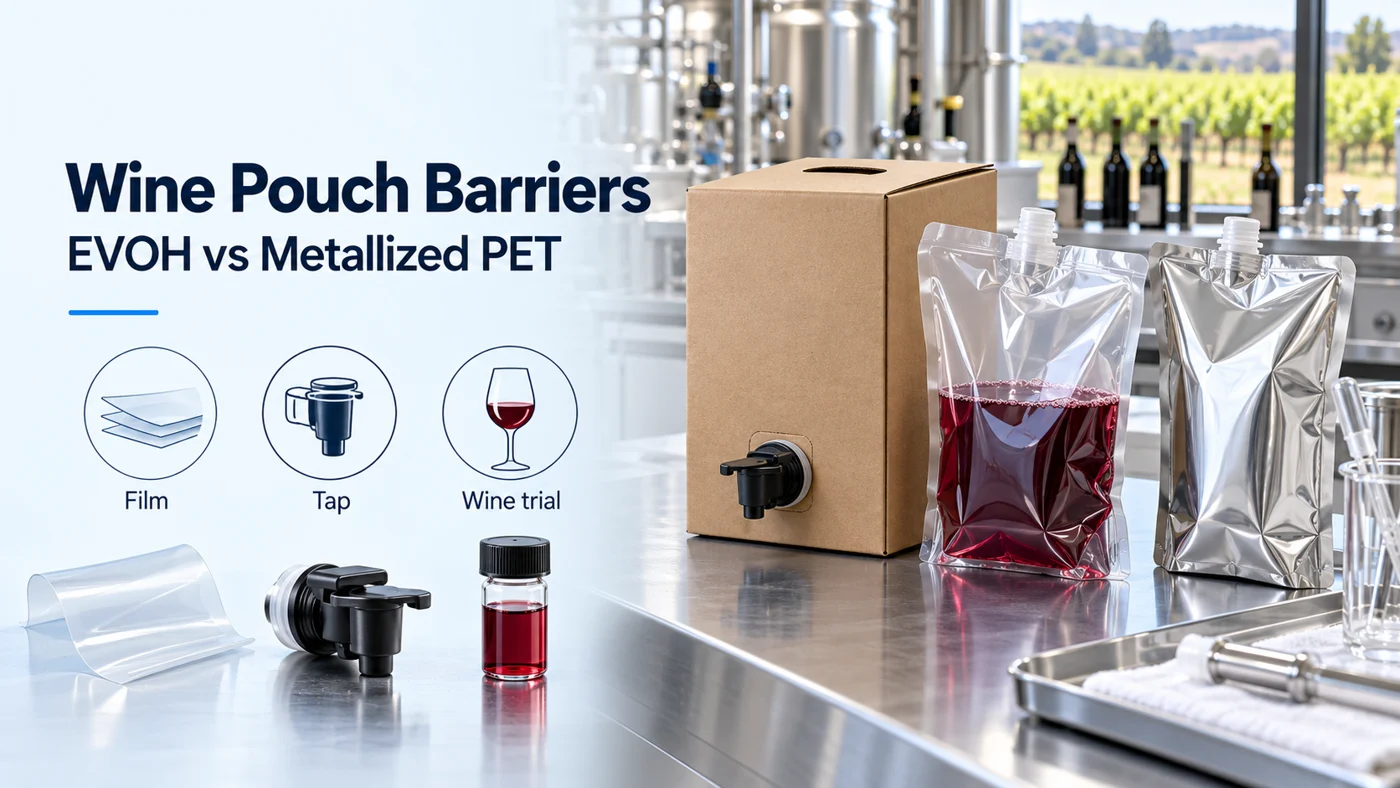
For bag-in-box wine pouch oxygen transmission, start the EVOH versus metallized PET comparison with the film after handling. Compare film structures using measurements of pre-flexed films. The tap can significantly affect oxygen transmission rate.
Use the comparison below to organise a pouch selection review: film behaviour, the tap connection, packing and the wine trial. For the wider cellar workflow, browse our winemaking and packaging guides.
What should you compare?
| Review area | Evidence to put beside each candidate |
|---|---|
| Film after handling | Pre-flexed film measurements |
| Tap connection | Tap and neck-interface ingress results |
| Filling | Headspace and dissolved oxygen records |
| Wine trial | Wine chemistry, preservative, sanitation, heat and transport records |
EVOH versus metallized PET: which differences matter?
EVOH is a hydrophilic polymer. In Kuraray’s EVAL layer, as absorbed humidity leaves, barrier performance improves. Include humidity conditioning in the EVOH comparison brief.
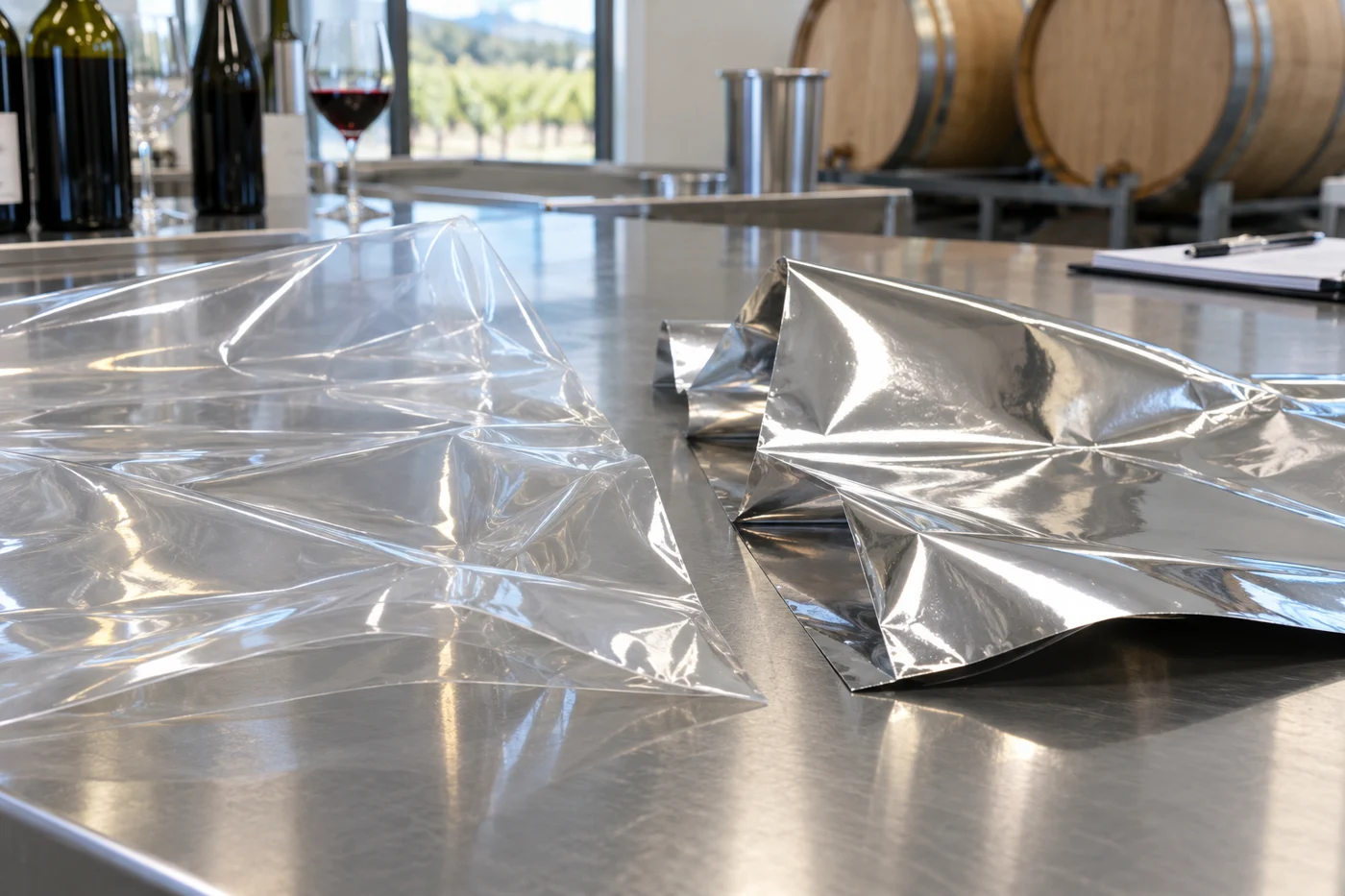
Smurfit Kappa describes how crumpling and creases can damage metallisation and reduce the oxygen barrier. In its historical film comparison, Smurfit Kappa reports greater flex-cracking resistance for its EVOH film than metallised polyester laminate. Put handling exposure beside the material choice when reviewing the candidate films.
What did the transport comparison find?
In Sundell and colleagues’ transport study of red French table wine, the tested EVOH bags were more permeable than Al-laminated bags, while Met. PET had the highest oxygen permeability. The study showed no visible bag leakage. Keep that comparison attached to the tested constructions when shortlisting a pouch. Ask for the candidate’s own pre-flexed results.
For barrier film, temperature and oxygen transmission rate are positively correlated. Record test temperature beside each result in the comparison sheet.
How much oxygen can enter through the tap?
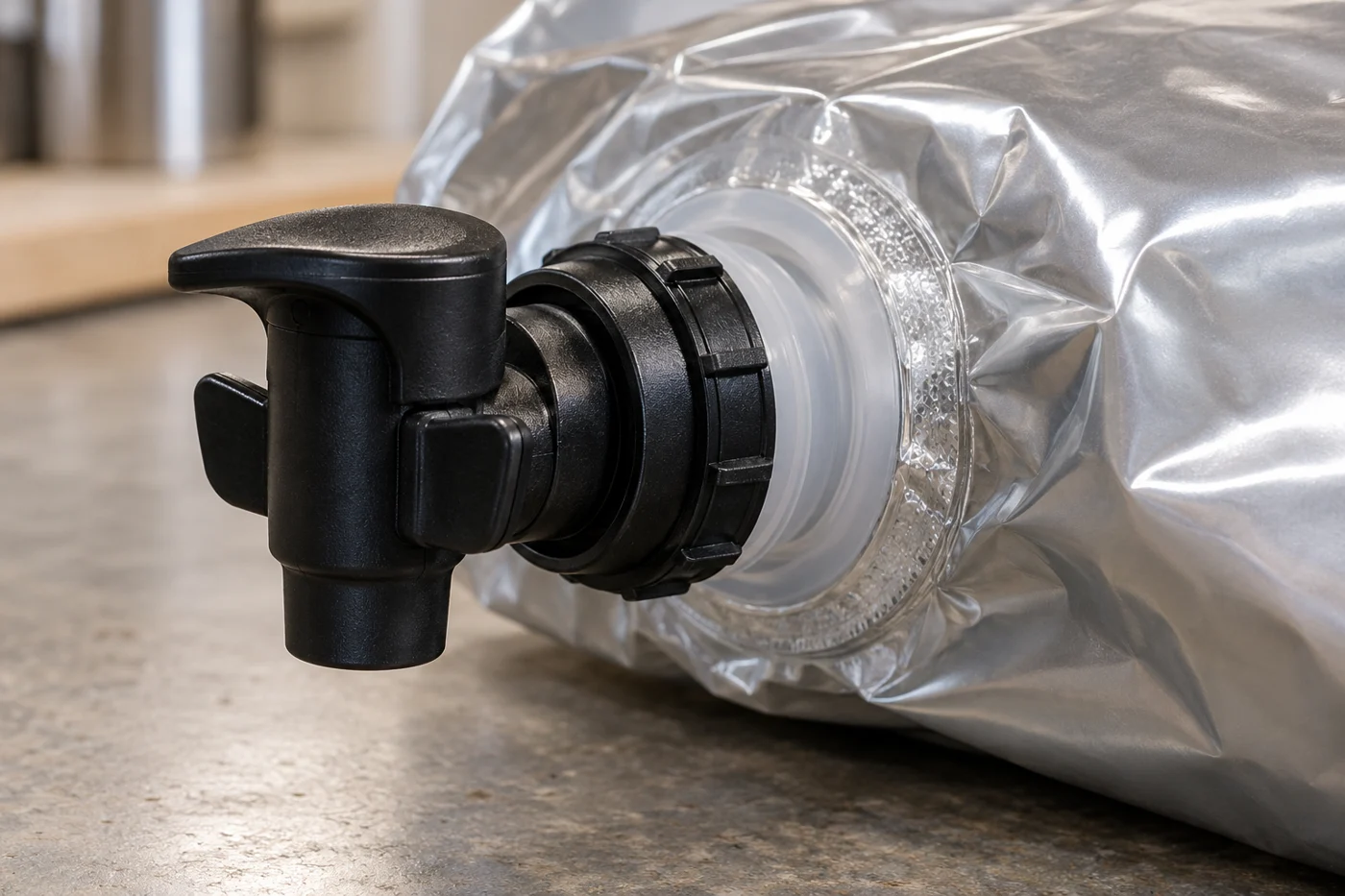
In Doyon and colleagues’ Canadian distribution study, the tap caused up to 60% of total oxygen ingress. In that study, the neck and valve–neck interface accounted for 10–16% of tap permeation. Keep the denominators visible in your review: total ingress for the tap finding, tap permeation for the interface finding.
The snugness of the fit was particularly temperature-sensitive under the study’s experimental conditions. In the same study, Met.Pet damage occurred mainly near the edges and around the tap. Include the tap connection and surrounding pouch area in the inspection plan.
How can the filled assembly be assessed?
Filled-bag total gas permeation can be measured from changes in dissolved oxygen. Request filled-bag results alongside the film comparison, and identify the tap assembly used in the test.
Protect the pouch during storage and packing
Flex cracking increases film oxygen transmission and can cause leakage in extreme cases. Handle pouches carefully during packing to minimise shocks and excessive flexing. Optimising box and pouch size compatibility can improve flex cracking and pack deformation.
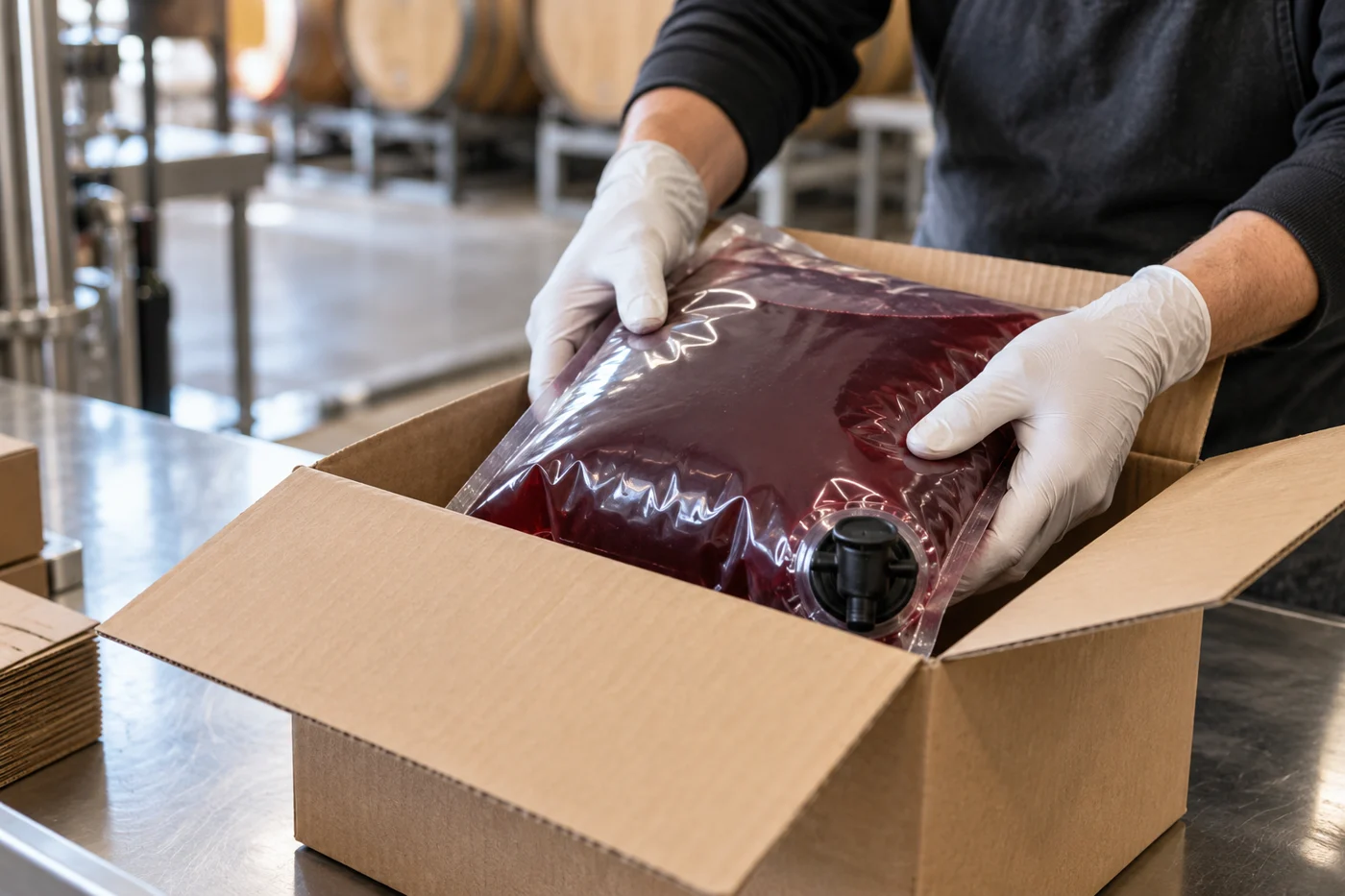
Excessive heat during storage of bags prior to production can deform taps and degrade bag material. Include the empty-bag storage area and the packing station in the pouch review.
BIB wine shelf life and free sulfur dioxide loss
Total package oxygen includes headspace oxygen and oxygen dissolved in the wine. Keep a filling-oxygen record alongside the subsequent wine-trial results.
Preservative levels at filling need attention because the pack is oxygen-permeable. Sundell and colleagues measured free and total sulfur dioxide, oxygen and colour after filling. Observed wine shelf life exceeded the theoretical calculations in that study. Use the wine trial as the decision point for shelf life.
Product trials should be conducted to determine appropriate best-before dates as wine life may be affected by wine chemistry, preservative levels, sanitation, exposure to heat and transport.
Bring the evidence together before choosing
Use this review sequence for each candidate pouch:
- Put the pre-flexed film results next to the proposed film construction.
- Add the tap assembly and neck-interface test records.
- Review empty-bag storage, packing handling and box-to-pouch fit.
- Attach filling-oxygen records and the wine trial to the selection decision.
For the next stage of your packaging review, return to the blog.
Sources
- Australian Grape and Wine — Wine Packaging Guidelines
- Kuraray — EVOH barrier resins and monolayer film
- Smurfit Kappa — Wine application BIB
- Sundell and colleagues — Bag-in-box packaging for wine: Analysis of transport stress in barrier films
- Doyon and colleagues — Canadian bag-in-box wine under distribution channel abuse
- Performance BIB — Technical Specifications of Wine BIB Packaging
- Vinventions — How to monitor oxygen levels during wine packaging